
Planting
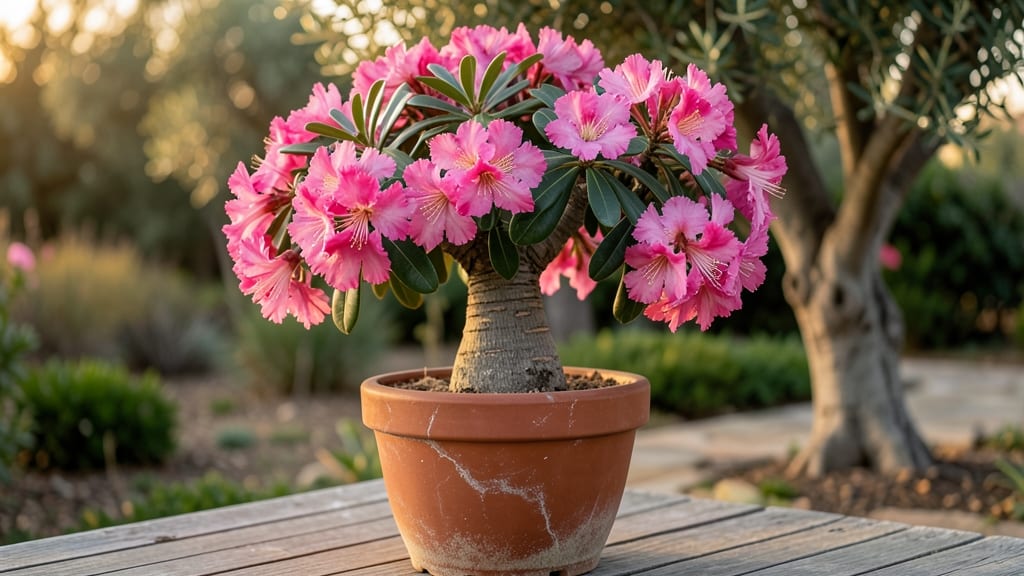
Growing a pink desert rose (Adenium obesum) means adding a dramatic, drought-resistant stunner to your garden that blooms like it’s on vacation. 🌵 I’ve had mine thrive in full sun where other plants wilt—its thick, caudex-like trunk and velvety pink flowers make it the star of my patio, even when summer temperatures hit 100°F.
The key? Mimicking its natural desert habitat with sharp drainage and minimal fuss.
This plant begs for bright, direct sunlight (at least 6 hours daily) and soil that drains faster than a kid on a sugar rush—think cactus mix with extra perlite or pumice.
Watering’s where most beginners stumble: soak the soil once a week in summer, then let it dry completely between waterings. Overwatering turns those lush leaves yellow faster than a wilting cactus in a rainstorm.
Feed it balanced fertilizer (like 10-10-10) every 4-6 weeks during growing season, and prune after blooming to shape its dramatic silhouette. Winter’s the time to dial back watering—let the soil stay bone-dry for months if temperatures dip below 50°F.
The payoff? A plant that rewards your low-maintenance love with bold blooms from spring to fall.
Propagation’s the fun part: take stem cuttings in summer, let them callous for a day, then root in dry soil. Patience is key—these cuttings can take 4-6 weeks to sprout, but they’re worth it.
Whether you’re growing in pots or planting directly, this desert rose turns sunny spots into showstoppers with almost no effort.
📚 In This Guide
- What you need
- Instructions
- Tips and common mistakes
- Wrapping up and next steps
What you need
- ● Pink Desert Rose Seeds or Seedlings: 1–3 plants (check if they’re Adenium obesum varieties like 'Pink Glow' or 'Desert Rose').
- ● Well-Draining Soil Mix: 3–5 gallons of a blend like 50% cactus/succulent soil + 30% perlite/pumice + 20% coarse sand (or pre-mixed desert rose mix).
- ● Pot or Garden Space: For pots: 1–2 containers (10–12 inches in diameter) with drainage holes. Terracotta or ceramic works best.
- ● For gardens: Full sun exposure (6+ hours/day) in USDA Zones 10–12 (or container-grown in colder climates).
- ● Drainage Layer: 1–2 inches of gravel, pebbles, or broken pottery at the pot’s bottom.
- ● Watering Can or Hose with Gentle Spray: Avoid overwatering—this plant hates soggy roots!
- ● Slow-Release Fertilizer: 1–2 tbsp of balanced 10-10-10 fertilizer or a succulent-specific option.
- ● Pruning Shears: For shaping or trimming leggy stems (sterilize with rubbing alcohol).
- ● Gloves: Cactus/succulent gloves to protect hands from latex sap (can irritate skin).
- ● pH Test Kit: Ideal soil pH for desert roses: 6.0–7.5.
- ○ Mulch (Optional): Gravel or small rocks around the base to retain moisture and deter weeds.
- ● Grow Lights (Indoor Growers): LED full-spectrum lights (12+ hours/day) if natural sunlight is limited.
Step-by-step guide to cultivating a thriving pink desert rose
Here’s how to coax vibrant pink blooms from this desert beauty—no green thumb required.
🪴 Step 1: Choose the Right Pot and Soil Mix
Pink desert roses (Adenium obesum) need well-draining soil to prevent root rot. Use a cactus/succulent mix blended with 20% perlite or pumice for aeration. A terracotta pot (unglazed) is ideal—it breathes and wicks away excess moisture. If using plastic, ensure it has drainage holes and elevate it on a saucer to catch runoff.
Fill the pot 2/3 full with the soil mix, then press lightly to settle. The key is loose, gritty soil—never compact it. Desert roses hate soggy roots, so if your mix feels dense, add more perlite. I like to add a slow-release fertilizer (like 5-10-5) at planting time for a gentle nutrient boost.
☀️ Step 2: Position for Maximum Sunlight
Pink desert roses demand full sun—at least 6-8 hours daily—to thrive. Place your plant near a south-facing window or under grow lights if indoors. Outdoors, they handle direct afternoon sun better than shade. Watch for yellowing leaves—this signals insufficient light.
If growing indoors, rotate the pot quarter-turn weekly to prevent lopsided growth. You’ll notice stems leaning toward the light? That’s your cue to move it closer. Desert roses grow best when temperature stays between 70-90°F—they’re tropical desert plants, after all.
💧 Step 3: Water Deeply but Infrequently
This is where most gardeners go wrong. Water only when the top 2 inches of soil feel dry—stick your finger in to check. When watering, soak thoroughly until water drains from the bottom. Empty the saucer 10 minutes later to avoid root rot.
Desert roses store water in their thick stems, so they’re drought-tolerant but not drought-proof. Overwatering is the #1 killer—wilting leaves or mushy stems mean you’ve overdone it. Reduce watering in winter (growth slows), but never let soil dry completely.
✂️ Step 4: Prune and Fertilize for Blooms
Prune after flowering to encourage bushier growth. Cut back 1/3 of the plant to the first set of leaves below the blooms. Use sterilized shears to avoid disease. Desert roses bloom on new growth, so pruning in late winter/early spring sets the stage for summer flowers.
Feed every 4-6 weeks during growing season with a balanced fertilizer (like 20-20-20). Reduce feeding in fall/winter. I’ve found that a light application of epsom salt (1 tbsp per gallon of water) monthly boosts pink hues in the blooms.
🌿 Step 5: Overwinter for Year-Round Growth
If temperatures drop below 50°F, move your desert rose indoors near a sunny window. Reduce watering to every 3-4 weeks and stop fertilizing. The plant enters dormancy—don’t panic if growth slows. Resume normal care in spring when buds form.
Outdoors in warm climates? Mulch the base with gravel (not organic mulch) to protect roots. Desert roses are evergreen in frost-free zones—they’ll reward patience with year-round blooms if cared for properly.
Tips & tricks for perfect pink desert rose cultivation
These essential insights will help you avoid common pitfalls and coax the most vibrant blooms from your desert rose.
Soil Mix Precision: When blending your cactus/succulent mix with 20% perlite or pumice, aim for a texture that resembles coarse sand. I've found that adding a handful of coarse sand to the mix improves drainage even further. The goal is to create a medium where water drains within 10 minutes—this prevents the very root rot that kills so many desert roses.
Light Positioning Strategy: The 6-8 hours of sunlight requirement is non-negotiable, but placement matters just as much. For indoor plants, position your desert rose within 2 feet of the south-facing window during winter months when sunlight is weaker. You'll notice the stems naturally grow toward the light—this is your plant communicating its needs. Rotating the pot weekly prevents this from becoming a permanent growth pattern.
Watering Technique: The finger-check method for soil moisture is brilliant, but here's the pro move: use a chopstick or skewer to check deeper moisture levels. Desert roses store water in their thick stems, so the top 2 inches might feel dry while moisture remains deeper. Water until it drains freely from the bottom—this ensures the entire root system gets hydrated, not just the surface layer.
Pruning Timing: The instructions mention pruning after flowering, but I've discovered that the absolute best time is during the first week of spring when new growth begins. Cutting back 1/3 of the plant at this stage encourages vigorous new shoots that will produce more blooms. Always use sterilized shears to prevent introducing pathogens to your plant's open wounds.
Pro Tips for Pink Desert Rose Plant
- These essential insights will help you avoid common pitfalls and coax the most vibrant blooms from your desert rose.
- Soil Mix Precision: When blending your cactus/succulent mix with 20% perlite or pumice, aim for a texture that resembles coarse sand.
- Light Positioning Strategy: The 6-8 hours of sunlight requirement is non-negotiable, but placement matters just as much.
Frequently asked questions
Got questions about nurturing your pink desert rose plant? You’re not alone! Here are answers to the most common queries—from care basics to troubleshooting—so you can keep your plant thriving in style.
How often should I water my pink desert rose?
Water your pink desert rose deeply but infrequently—about once every 2-3 weeks, depending on your climate. Overwatering is the #1 killer! Let the soil dry out completely between waterings, and reduce frequency in winter. Pro tip: Stick your finger 2 inches into the soil—if it’s dry, it’s time to hydrate!
Can pink desert roses survive winter?
These plants are semi-hardy—they tolerate light frosts (down to 20°F/-7°C) but may need protection in colder zones. In freezing climates, mulch the base or move pots to a sheltered spot. If temperatures drop below 15°F/-9°C, consider bringing container plants indoors near a sunny window.
Why are my desert rose leaves turning yellow?
Yellow leaves usually signal overwatering or poor drainage. Check if the soil stays soggy for days—desert roses hate "wet feet." If your pot lacks drainage holes, repot immediately. Brown, crispy leaves? That’s often underwatering or sunburn. Gradually acclimate your plant to full sun to avoid shock.
Are there alternatives to pink desert roses for dry climates?
If you love drought-resistant, low-maintenance plants, try these sun-loving stars:
- Prickly Pear Cactus – Bold, colorful pads with minimal care.
- Agave – Spiky, architectural, and thrives in heat.
- Lantana – Flowering powerhouse with vibrant blooms.
- Russian Sage – Fragrant, purple spikes that attract pollinators.
How long does it take for a pink desert rose to bloom?
With patience (and the right conditions), expect first blooms in 1-2 years from seeds or cuttings. Mature plants (3+ years old) may flower year-round in warm climates, but they often take a summer break after heavy blooming. Boost flowering by fertilizing lightly in spring with a low-phosphorus feed (like 5-10-10).
Wrapping up and next steps
The Pink Desert Rose isn’t just a stunning addition to your garden—it’s a resilient, low-maintenance beauty that thrives where others falter. With its drought-resistant nature and vibrant blooms, it’s perfect for sunny spots and beginners alike.
Whether you’re a seasoned gardener or just starting, this plant offers both easy care and eye-catching charm.
Ready to bring a splash of color to your outdoor space? Start small—plant one in a pot or directly in your garden, and watch it flourish with minimal effort! 🌵✨