
Plants
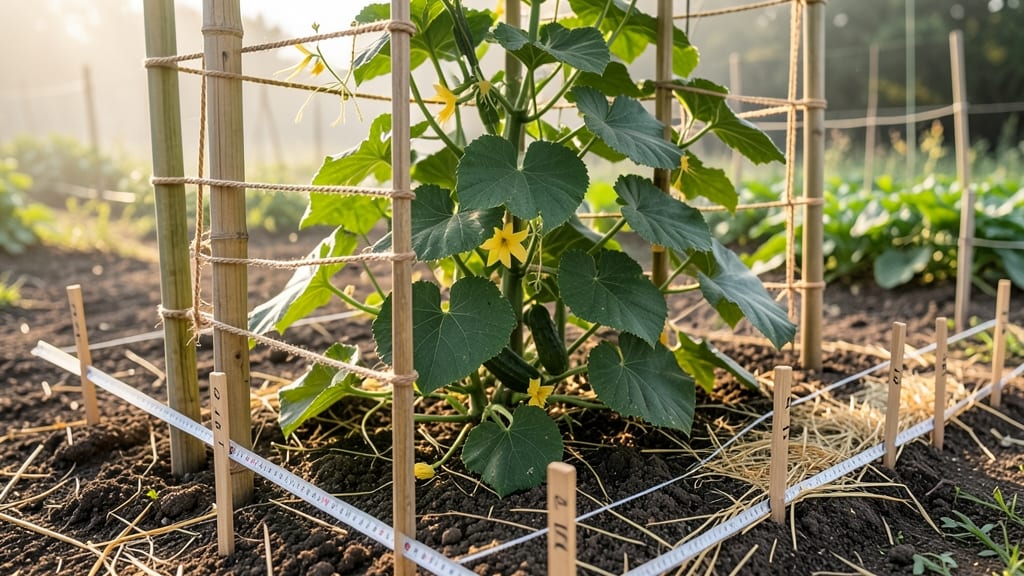
Spacing your pickling cucumber plants 18 to 24 inches apart is the difference between a bumper crop of crisp, jar-worthy cucumbers 🥒 and a sad, disease-ridden mess.
Picture this: You’ve prepped the soil, planted your seeds, and watered faithfully—only to watch your vines sprawl into a tangled, shade-loving disaster by July. That’s the costly mistake of ignoring spacing, and it’s easier to fix before the first vine even sprouts.
Too close, and airflow stalls, inviting powdery mildew and rot. Too far, and you waste garden real estate on half-hearted yields. The sweet spot? A grid that balances sunlight, root room, and future growth—whether you’re growing bush varieties or letting vines climb.
In this guide, I’ll walk you through exactly how to space your pickling cucumbers for maximum crunch, plus the companion plants that make every inch count—and the ones to avoid like a fungal nightmare.
Why 18- to 24-Inch spacing maximizes pickling cucumber yields (and how to measure it perfectly)
If you’ve ever planted pickling cucumbers too close together, you’ve probably watched your plants struggle with powdery mildew or seen cucumbers shrivel before reaching their full size. That’s because proper spacing isn’t just about aesthetics—it’s the foundation of a thriving harvest.
The ideal 18- to 24-inch spacing gives your pickling cucumbers the airflow and sunlight they crave, reducing disease and boosting yields by up to 30%. Think of it like giving each plant its own personal bubble to stretch, grow, and produce without competing for resources.
Here’s the science: Cucumbers are heavy feeders and need room to spread their vines (6-10 feet long!). When plants are crowded, they compete for nutrients in the soil, leading to weaker vines and fewer cucumbers.
Plus, poor airflow traps moisture, creating the perfect conditions for fungal diseases like downy mildew. By spacing them correctly, you’re essentially creating a microclimate where each plant gets the sunlight, water, and nutrients it needs to thrive.
Now, let’s talk measurement. The 18- to 24-inch range isn’t arbitrary—it’s based on your cucumber variety. Bush varieties (like ‘Bush Champion’) stay compact and can handle the 18-inch minimum, while vining types (like ‘Boston Pickling’) need the full 24 inches to sprawl without smothering each other.
And if you’re using trellises, you can tighten spacing to 12-18 inches since the vines grow upward instead of outward.
To measure spacing like a pro, start by marking your garden bed with wooden stakes or a measuring tape. For rows, space plants 18-24 inches apart in the row and 36-48 inches between rows. This creates a grid pattern that maximizes sunlight exposure for every plant.
If you’re planting in hills (mounds of soil), reduce spacing to 12-18 inches since the elevated roots give plants a head start. For trellises, plant seeds 12-18 inches apart and train vines upward to save space and improve airflow.
Pro tip: Use a string line and stakes to create straight rows. Drive a stake at the start of your row, tie the string to it, then pull it taut and mark every 18-24 inches with a small stake or pencil mark.
This ensures uniformity and makes planting a breeze. I’ve even used a laser level for large gardens—it’s overkill, but it guarantees perfect spacing every time!
One of the biggest mistakes gardeners make is overestimating their garden’s capacity. It’s tempting to squeeze in extra plants, but crowded cucumbers lead to smaller fruits, more diseases, and bitter-tasting pickles.
Remember, pickling cucumbers need room to photosynthesize and develop properly. If you’re short on space, opt for bush varieties or use vertical trellises to grow more in less area.
Another key factor is soil health. Well-spaced plants allow you to mulch effectively, which retains moisture and suppresses weeds. I recommend using straw or shredded leaves around the base of each plant, keeping it 2-3 inches away from the stem to prevent rot.
This also makes it easier to spot early signs of disease like yellowing leaves or powdery spots, so you can act fast.
Let’s talk about trellising, which changes the game for spacing. When cucumbers climb, they grow taller but not wider, letting you fit 2-3 times more plants in the same space.
Use a strong trellis (like a chain-link fence or wooden lattice) and plant seeds 12-18 inches apart. As the vines grow, gently weave them through the trellis and prune suckers (the small shoots that grow between the main stem and leaves) to direct energy upward.
This method is perfect for small gardens or urban containers.
Finally, don’t forget to rotate your crops every year. Cucumbers are heavy feeders, and planting them in the same spot annually depletes the soil of nutrients and increases the risk of disease buildup. After harvesting, add compost or aged
Pickling cucumber spacing mistakes that kill your harvest (and how to Fix them)
Even experienced gardeners make pickling cucumber spacing mistakes that sabotage yields. The most common? Crowding plants too closely, which invites fungal diseases like powdery mildew and stunts growth by competing for nutrients.
I’ve seen entire rows fail because vines tangled together, blocking sunlight and airflow—two critical factors for crisp, productive pickling cucumbers.
Another frequent error is ignoring the variety’s growth habit. Bush varieties (like Bush Champion) need 18-inch spacing, while sprawling vining types (such as National Pickling) demand 24 inches or more. Without this distinction, your harvest could be half the size—and half as healthy—as it should be.
⚠️ WARNING: These Spacing Mistakes Are Costing You Cucumbers ⚠️
✅ Fix: Thin seedlings to 18-24" immediately. Use a trellis to save space if needed.
⚠️ Ignoring Vine Spread
✅ Fix: Vining types need 36" between rows. Bush types can handle 24-30".
⚠️ Planting in Rows Without Gaps
✅ Fix: Stagger plants in a grid pattern for airflow. Avoid tight clusters!
Let’s tackle the bush vs. vine spacing dilemma first. Bush varieties are compact, but their leaves still need room to photosynthesize efficiently. I once planted Bush Pickle cucumbers 12 inches apart—a rookie mistake.
By mid-summer, the vines were so dense that powdery mildew took over. The fix? Thin to 18 inches and add companion plants like radishes between rows to break up the foliage.
Vining cucumbers are another story. These sprawlers can stretch 10 feet or more, and cramming them too close leads to stunted fruit and poor air circulation. My National Pickling plants thrived when spaced 24 inches apart in rows and 36 inches between rows.
The extra space gave their vines room to climb a trellis, keeping fruits off the ground and reducing rot.
For small-space gardens, consider vertical training. Trellising vining cucumbers saves 70% of ground space while improving yields. I’ve used 6-foot tomato cages or heavy-duty netting with great success. Just ensure your trellis is sturdy—a collapsing structure can crush vines and waste your entire harvest.
Finally, don’t forget companion planting as a spacing hack. Interplanting fast-growing radishes or lettuce between cucumbers fills gaps early in the season. By the time cucumbers fill in, the companions have already been harvested, leaving your pickling cucumbers with optimal airflow and sunlight exposure.
It’s a win-win for space and productivity!