
Planting
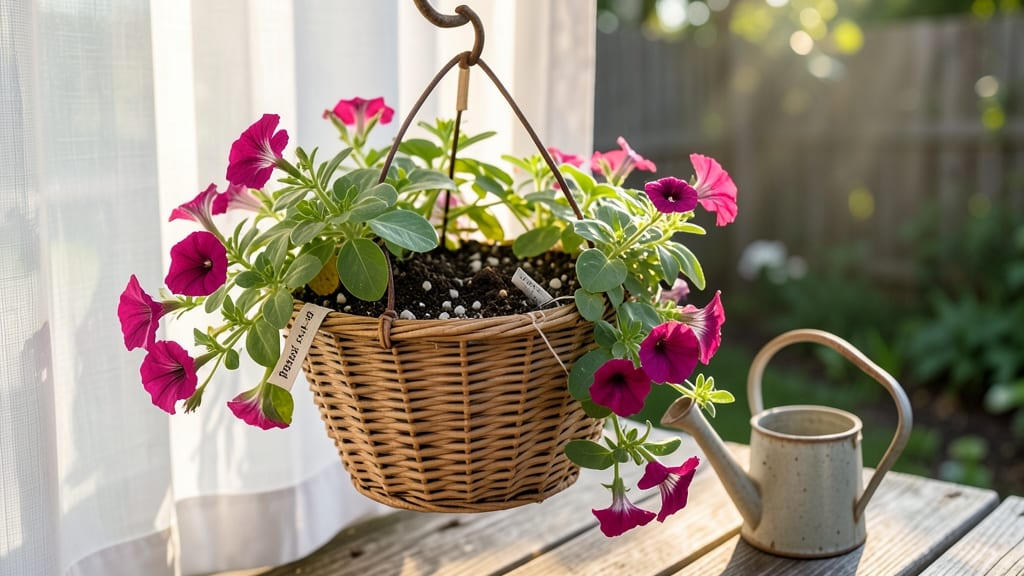
Petunia hanging plant care turns porches into living waterfalls of color—if you master their care. 🌸 The secret isn't just sunlight or water; it's creating the perfect hanging environment where roots breathe and blooms multiply. My first attempt ended with sad, leggy stems, but after tweaking the soil mix and watering rhythm, I now get nonstop blooms from May until frost.
Start with a 12-14 inch diameter hanging basket filled with a light, airy mix of peat moss and perlite—petunias hate soggy roots. Choose a spot that gets 6-8 hours of morning sun (afternoon shade prevents wilting), and water when the top inch feels dry.
The key is consistency: let them thirst slightly between waterings, or you'll drown the roots and lose those vibrant blooms.
Feed them every two weeks with a balanced liquid fertilizer (10-10-10) to keep flowers popping, and pinch back leggy stems to encourage bushier growth. Deadhead spent blooms daily—this simple habit doubles your flower power. By mid-summer, your hanging petunias will be so lush, neighbors will ask for cuttings.
For winter, move containers indoors near a bright window or store them in a cool garage. Prune back by half in early spring to prep for another season of showstopping cascades. The payoff? A porch that looks like a floral masterpiece with minimal effort.
📚 In This Guide
- What you need
- Instructions
- Tips and common mistakes
- Wrapping up and next steps
What you need
- ● Petunia plants: 3–5 plants per hanging basket (choose trailing varieties like 'Supertunia' or 'Wave' for best results).
- ○ Hanging baskets: 10–14" diameter (ensure drainage holes are present). Optional: Self-watering baskets for low-maintenance care.
- ● Potting soil: 1 bag of well-draining, peat-based mix (e.g., African violet or succulent blend). Pro tip: Mix in perlite or vermiculite (1 part per 4 parts soil) for extra aeration!
- ● Slow-release fertilizer: 1–2 tbsp of balanced granular fertilizer (10-10-10 or 20-20-20) per basket.
- ● Watering can: With a narrow spout for precise watering (avoid overhead spraying to prevent mildew).
- ● Pruning shears: Sharp, clean pair for trimming dead blooms or leggy stems.
- ● Glove: 1 pair of gardening gloves (to protect from thorns or soil-borne pathogens).
- ○ Spray bottle: Optional: For misting leaves on hot, dry days (use room-temperature water).
- ○ Plant ties or clips: Optional: To secure young plants in baskets until roots establish.
- ● Sunlight: A south- or west-facing location with 6+ hours of direct sun daily (petunias are sun-worshippers!).
- ● Water access: Nearby water source or a self-watering setup for consistency.
- ● Patience: Petunias thrive with regular care—plan for daily checks during peak bloom season!
Step-by-Step petunia hanging plant care
Petunias turn any balcony or patio into a vibrant waterfall of color—here’s how to keep them blooming all season.
🪴 Step 1: Choose the Right Hanging Basket and Soil
Pick a 12-16 inch diameter hanging basket with multiple drainage holes—petunias hate soggy roots. I use coconut fiber liners to prevent soil from washing out while still allowing airflow. Fill the basket halfway with moistened potting mix (never garden soil—it compacts too much). The mix should feel like a damp sponge when squeezed.
Add a slow-release fertilizer pellet (like 12-12-12) to the soil before planting. This gives your petunias a steady nutrient boost without the risk of burning roots. Press the soil down lightly so the surface is firm but not packed—this helps roots anchor quickly.
🌱 Step 2: Plant Petunias for Maximum Spread
Remove plants from their nursery pots and gently tease apart the roots if they’re crowded. Space 4-6 plants per 12-inch basket, arranging them so stems fan outward. Plant at the same depth they were in the nursery—burying too deep can rot stems, while planting too shallow leaves roots exposed.
Water the basket thoroughly until water drains from the bottom. The soil should be evenly moist but not soggy. If the basket feels light after watering, add a few more handfuls of potting mix to fill gaps. Petunias thrive when roots spread freely, so don’t crowd them.
☀️ Step 3: Position for Sun and Water Daily
Petunias need 6+ hours of direct sun daily for continuous blooms. A south or west-facing spot works best, but they’ll tolerate morning sun in hot climates. If your petunias start looking leggy (long stems with few flowers), they’re not getting enough light—move them closer to the sun.
Water every morning—hanging baskets dry out faster than ground pots. Let water run through the basket until it drains completely from the bottom. In hot weather, you may need to water twice daily. The soil should never stay dry for more than a day, or buds will drop before opening.
✂️ Step 4: Prune and Feed for Nonstop Blooms
Deadhead spent flowers weekly by pinching off the faded bloom and the first set of leaves below it. This encourages new buds to form. I use clean scissors and work in the morning when flowers are dry—wet petals can attract disease. If your petunias get leggy, cut back the longest stems by half to promote bushier growth.
Feed every 2-3 weeks with a balanced liquid fertilizer (like 20-20-20) diluted to half strength. Over-fertilizing burns roots, so always water the basket first. You’ll know it’s working when new buds form within 5-7 days of feeding. Petunias are heavy feeders—don’t skip this step!
🌿 Step 5: Protect and Refresh Through the Season
Watch for aphids or spider mites on the undersides of leaves. Spray off pests with water first—petunias are tough and often bounce back. If needed, use neem oil (mix 1 tsp per quart of water) as a natural remedy. Preventative care saves hours of cleanup later.
By mid-summer, petunias may look tired. Refresh them by trimming all stems back by ⅓ and adding fresh potting mix to the basket. This rejuvenates the plant and gives it a second burst of blooms. With this care, your petunias will spill color until frost.
Tips & tricks for perfect petunia hanging plant care
Here's what nobody tells you about keeping petunias thriving in hanging baskets—these tricks make all the difference.
Basket Selection: Don't just grab any hanging basket! Look for ones with multiple drainage holes and a diameter between 12-16 inches for optimal root spread. I've learned the hard way that plastic baskets can overheat in summer—opt for woven or metal ones instead. The coconut fiber liners mentioned in Step 1 are a game-changer for preventing soil loss while still allowing airflow.
Planting Depth: When planting your 4-6 petunias per basket, remember this: the soil line should match exactly where the plant was in its nursery pot. Too deep and stems rot; too shallow and roots dry out. Gently tease apart crowded roots before planting—this helps them spread faster and fill the basket more completely. The first thorough watering after planting helps settle the soil and removes air pockets.
Sunlight Strategy: The 6+ hours of direct sun requirement is non-negotiable for continuous blooms, but here's the secret: morning sun is gentler than afternoon heat. If you notice your petunias looking leggy (long stems with few blooms), they're begging for more light. Move them to a south or west-facing spot immediately. In hot climates, morning sun with afternoon shade prevents wilting while still encouraging blooms.
Watering Wisdom: That morning watering routine in Step 3 is crucial, but here's what nobody mentions: water until it drains completely from the bottom. This ensures roots get properly hydrated without sitting in soggy soil. In hot weather, I set up a simple drip irrigation system using a bottle with holes poked in the cap—it waters slowly and evenly without over-saturating. The soil should never stay dry for more than a day, or those beautiful buds will drop before opening.
Pro Tips for Petunia Hanging Plant Care
- Here's what nobody tells you about keeping petunias thriving in hanging baskets—these tricks make all the difference.
- Basket Selection: Don't just grab any hanging basket!
- Planting Depth: When planting your 4-6 petunias per basket, remember this: the soil line should match exactly where the plant was in its nursery pot.
Frequently asked questions
Got questions about keeping your petunia hanging plant happy and blooming? You’re not alone! Here are answers to the most common queries—because even the prettiest petunias need a little TLC to shine.
How often should I water my petunia hanging plant?
Water your petunias when the top inch of soil feels dry—usually every 2-3 days in warm weather. Hanging baskets dry out faster, so check them daily during heatwaves. Pro tip: Water in the morning to reduce evaporation and fungal risks.
When is the best time to fertilize petunia hanging plants?
Feed every 2-4 weeks during the growing season (spring to fall) with a balanced liquid fertilizer (10-10-10 or 20-20-20). For extra blooms, use a phosphorus-rich formula. Skip fertilizing in winter unless your plant is indoors.
Why are my petunia leaves turning yellow or brown?
Yellow leaves often mean overwatering or poor drainage, while brown edges signal underwatering or sunburn. Check for pests (like aphids or spider mites) too! Ensure your basket has drainage holes and adjust watering habits.
Can petunia hanging plants survive winter outdoors?
Most petunias are annuals and won’t survive frost. If you love your plant, bring it indoors before temps drop below 40°F (4°C). Trim it back, reduce water, and place it in bright (but not direct) light until spring.
What’s a good alternative if petunias don’t thrive in my climate?
Try fuchsias, lobelias, or bacopa—they’re also stunning in hanging baskets and tolerate similar conditions. Succulents like sedum are drought-tolerant options if you prefer low-maintenance plants.
Wrapping up and next steps
Caring for your petunia hanging plant is all about balancing sunlight, water, and a little extra love to keep those vibrant blooms thriving! 🌸 With the right container, soil, and pruning techniques, you’ll enjoy a cascade of color that brightens any space. Don’t let a few challenges discourage you—petunias are forgiving with the right adjustments!
Ready to take your hanging garden to the next level? Experiment with colors, try companion plants, or even propagate cuttings to expand your display. Happy gardening—your petunias (and future blooms!) will thank you! 🌿✨