
Planting
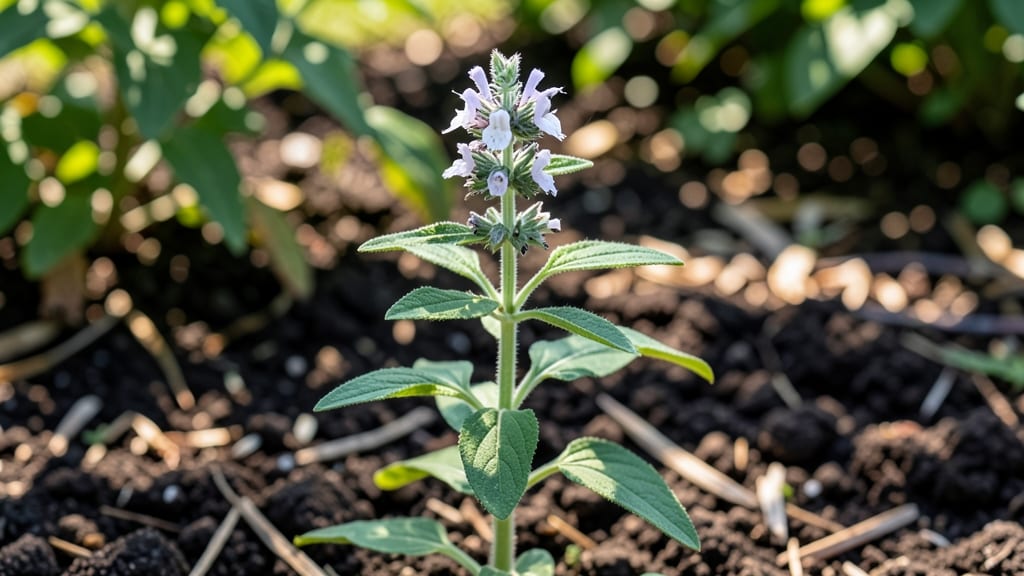
Yes, chia is a plant—specifically Salvia hispanica, a flowering herb native to Mexico and Guatemala, cultivated for its nutrient-dense seeds used in health foods and gardening.
Chia isn't just a superfood—it's a whole plant with striking lavender flowers that bloom in warm climates. 🌱 The seeds we eat come from this annual herb, which thrives in dry conditions similar to its native Central American habitat.
What's fascinating is how its botanical family (Lamiaceae, the same as mint and basil) gives chia some surprising culinary cousins despite its seed-focused reputation.
This plant has been cultivated for over 3,500 years, originally by Aztec warriors who used chia seeds for energy during long battles.
The entire plant—from its delicate flowers to its fibrous stems—plays a role in its growth cycle, though we primarily harvest the seeds for their omega-3 content and gel-forming properties.
💡 In This Article
- Chia Plant Family and Botanical Classification
- Growing Chia Plants: Conditions and Cultivation Tips
Chia plant family and botanical classification
Chia belongs to the Lamiaceae family—better known as the mint family—which explains why its leaves share similar square stems and aromatic qualities with basil, oregano, and thyme.
This botanical classification places chia in the same genus as other medicinal herbs, though it stands out as the only member cultivated primarily for its seeds rather than foliage.
The scientific name Salvia hispanica reflects its Spanish origins, where "salvia" means "healing" in Latin, referencing its historical use by indigenous cultures for both sustenance and medicine.
The chia plant grows as an annual herb, reaching heights of 1-3 feet with delicate lavender flowers that bloom in clusters. Unlike seed crops like flax or quinoa, chia's flowers aren't its main harvest—it's the tiny, oval seeds (about 1-2 millimeters long) that form after pollination.
These seeds contain 18-24% protein and 30% oil, making them one of the most nutrient-dense plant sources available. The plant's fibrous roots and woody stems help it thrive in dry conditions, a trait shared with its desert-adapted relatives.
What makes chia unique among seed plants is its gel-forming ability when hydrated—a process driven by the seeds' high soluble fiber content (about 40% by weight).
This property comes from the plant's evolutionary adaptation to store moisture in arid climates, allowing chia to absorb up to 10 times its weight in water.
Unlike flax seeds (which belong to the Linaceae family) or quinoa (a pseudocereal), chia's seeds develop within a four-lobed calyx that splits open when mature, revealing the familiar black or white seeds we recognize today.
The chia plant's growth cycle mirrors its native Central American environment, where it thrives in 60-90°F temperatures and 6-8 hours of sunlight daily. Its flowers are pollinated by bees, and the seeds mature in just 60-90 days after planting—a rapid growth cycle compared to perennial crops.
The entire plant, from its square stems to its fibrous roots, plays a role in its resilience, making chia an adaptable crop for both commercial farming and home gardens.
Botanists often compare chia to other seed-bearing plants like flax or sesame, but its placement in the Lamiaceae family gives it distinct characteristics. For example, while flax produces seeds from a different botanical structure (a capsule), chia's seeds emerge from a closed fruit called a schizocarp.
This botanical detail affects how the seeds are harvested—chia plants are typically cut by hand when the flowers turn brown, ensuring optimal seed yield without damaging the plant's delicate structure.
One fascinating aspect of chia's botanical classification is its chemical composition. The seeds contain alpha-linolenic acid (ALA), an omega-3 fatty acid that's rare in plant-based sources. This compound, along with antioxidants like quercetin, comes directly from the plant's metabolic processes during seed development.
The high concentration of these nutrients in such a small seed (about 2,000 seeds per gram) is what makes chia a nutritional powerhouse—far exceeding the nutrient density of many other seed crops.