
Planting
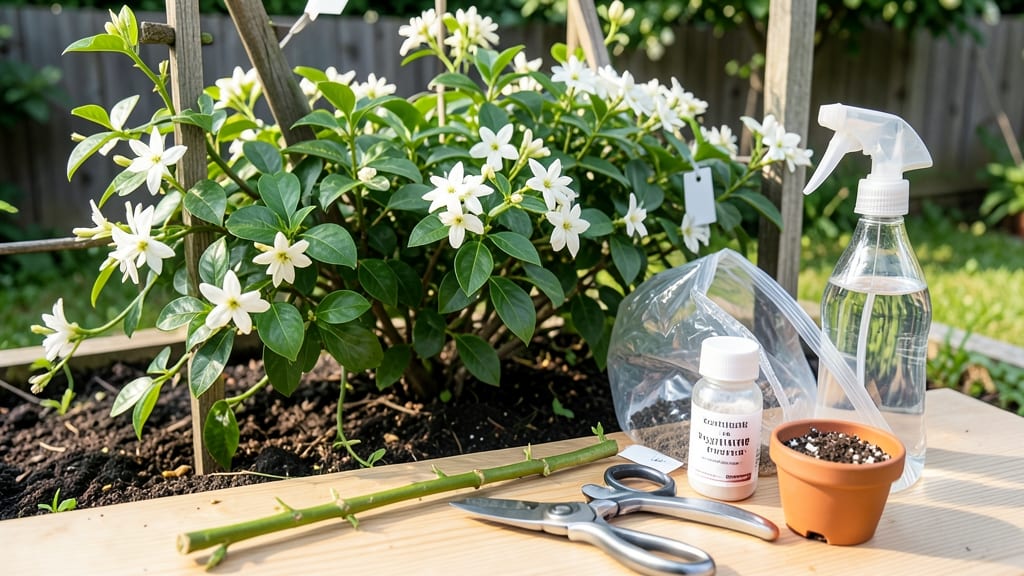
Taking jasmine cuttings in late spring or early summer means fragrant blooms next year. 🌿 I’ve propagated jasmine from cuttings for years, and the secret is timing—when the plant is actively growing but before it flowers.
The right cuttings will root in just 4-6 weeks, giving you free plants to share or expand your garden.
The tools you need are simple: clean pruners, rooting hormone (optional but helpful), small pots, and a mix of perlite and peat moss. Start with 4-6 inch cuttings from new growth, making sure each has at least two leaf nodes.
Remove lower leaves to reduce moisture loss and dip the cut end in rooting hormone if you’re using it.
Once planted, keep the soil lightly moist and provide bright, indirect light—no direct sun yet. A humidity dome or plastic bag speeds up rooting by trapping moisture. In about 3-4 weeks, you’ll see new growth, which means roots are forming.
This is where patience pays off: fragrant jasmine blooms start with a single cutting.
After rooting, transplant to individual pots and gradually introduce them to outdoor conditions. By next spring, your new jasmine plants will be ready to bloom, filling your garden with that classic sweet scent.
The best part? You’ll have more jasmine than you know what to do with—and free plants for friends who love fragrance.
📚 In This Guide
- What you need
- Instructions
- Tips and common mistakes
- Wrapping up and next steps
What you need
- ● Healthy jasmine plant: Choose a mature, non-flowering stem (4–6 inches long with at least 2–3 leaf nodes). Pro tip: Morning glory jasmine (Trachelospermum) or star jasmine (Trachelospermum jasminoides) work beautifully!
- ● Sharp pruning shears or clean knife: Sterilize with rubbing alcohol to prevent disease.
- ○ Rooting hormone (optional but recommended): A small jar or powder (e.g., Rootone) speeds up root growth.
- ● Well-draining potting mix: Use a blend of perlite, sand, and peat moss (or a cactus/succulent mix for faster drainage).
- ● Small pots or propagation tray: 4–6 inch pots with drainage holes work best (or a clear plastic dome to retain humidity).
- ● Watering can or spray bottle: Keep the mix moist but not soggy.
- ● Clear plastic bag or humidity dome: Helps maintain a tropical environment for rooting.
- ● Rubbing alcohol or bleach: For sterilizing tools and containers.
- ● Heat mat: Keeps soil warm (70–75°F) for faster rooting.
- ● Grow lights: If propagating indoors with low light.
- ● Twine or plant ties: To secure cuttings if needed.
- ● Misting bottle: For gentle hydration without overwatering.
Step-by-Step instructions for propagating jasmine cuttings
Here’s how I’ve successfully rooted jasmine cuttings—no green thumb required, just patience and these simple steps.
🌿 Step 1: Select Healthy Growth for Cuttings
Choose 4-6 inch semi-hardwood stems from the current season’s growth—look for non-flowering sections with 2-3 leaf nodes. The stem should feel firm but bend slightly, not brittle. I avoid woody, thick stems or overly soft new growth, as both root poorly. Snip just below a node with clean, sharp pruners to avoid crushing the stem.
Morning is the best time to take cuttings—jasmine plants are hydrated from overnight watering, making the stems more resilient. If you’re working with a potted plant, give it a deep watering 24 hours ahead to ensure the stems are plump and full of moisture.
💧 Step 2: Prepare Cuttings for Root Development
Strip the lower 1-2 inches of leaves from each cutting, leaving only the top 1-2 sets of leaves. This prevents moisture loss and directs energy toward root growth. Dip the cut end in rooting hormone (optional but helpful for faster results). I like to use a powder or gel—just enough to lightly coat the base without globs.
Place the prepared cuttings in a small glass of water (about 1 inch submerged) or directly into a moistened propagation mix (like perlite and peat moss). If using water, change it every 3-4 days to prevent bacterial growth. You’ll know it’s working when tiny white bumps appear along the submerged stem after 2-3 weeks.
☀️ Step 3: Create Ideal Conditions for Rooting
Set up a humid, warm environment—a clear plastic bag over a pot works well, or use a propagation dome. Keep the temperature between 65-75°F and avoid direct sunlight, which can stress the cuttings. A bright, indirect spot (like an east-facing window) is perfect. Mist the cuttings daily to maintain humidity, or use a spray bottle to keep the leaves from drying out.
Rooting takes 4-8 weeks, depending on the jasmine variety. I check progress by gently tugging on the cutting—if there’s light resistance, roots have formed. Avoid moving the cuttings once they’re in place; jasmine is sensitive to disturbances during this phase.
🪴 Step 4: Transplant Rooted Cuttings
Once roots reach 1-2 inches, it’s time to transplant. Fill a small pot (4-6 inches) with well-draining potting mix—jasmine hates soggy soil. Gently remove the cutting from water or propagation mix, shaking off excess moisture, then plant it 1 inch deeper than it was in water. Firm the soil around the base to eliminate air pockets.
Water lightly and place the pot in partial shade for 1-2 weeks to help it adjust. After that, gradually introduce it to morning sun before moving it to full sun. You’ll see new growth in 3-4 weeks—a sign the cutting has successfully established itself.
Tips & tricks for propagating jasmine cuttings
Here's what I learned after rooting dozens of jasmine cuttings—these details make all the difference between success and frustration.
Timing is Everything: In Step 1, that 24-hour deep watering before taking cuttings is non-negotiable. I learned this the hard way after struggling with limp stems. The extra hydration plumps up the plant cells, making them more resilient during propagation. Morning is ideal because the plant's natural water content is at its peak after overnight hydration.
The Leaf Strategy: When preparing cuttings in Step 2, removing just the lower 1-2 inches of leaves is crucial. I used to leave too many leaves, which caused excessive moisture loss and slowed root development. The top 1-2 sets of leaves are all you need—they'll photosynthesize enough to support new root growth while minimizing water stress.
Rooting Hormone Hacks: While rooting hormone is optional, I've found that a light coating (just enough to see the powder) works best. Too much can actually suffocate the stem. For faster results, I like to dip the cut end and immediately plant it in moist propagation mix rather than letting it sit exposed to air. This keeps the hormone active longer.
Environmental Watch: Maintaining that 65-75°F temperature range in Step 3 is easier than it sounds. I keep my cuttings on a seedling mat during winter months when my home gets chilly. The daily misting is the most important part—jasmine leaves are delicate and dry out quickly. A spray bottle with a fine mist setting works perfectly.
Pro Tips for Take Cuttings From Jasmine Plant
- Here's what I learned after rooting dozens of jasmine cuttings—these details make all the difference between success and frustration.
- Timing is Everything: In Step 1, that 24-hour deep watering before taking cuttings is non-negotiable.
- The Leaf Strategy: When preparing cuttings in Step 2, removing just the lower 1-2 inches of leaves is crucial.
Frequently asked questions
Got questions about propagating your jasmine plant?
You’re not alone! Here are answers to the most common concerns—so you can grow those fragrant blooms with confidence.
When is the best time to take jasmine cuttings?
The ideal window is late spring or early summer when new growth is vigorous and the plant is actively producing leaves. Avoid winter or extreme heat—jasmine struggles to root in these conditions. Aim for morning cuttings to reduce stress on the plant.
How do I know if my cutting is healthy enough to root?
A healthy jasmine cutting should have 3–4 sets of leaves (not just one!) and 1–2 inches of stem below the lowest leaf node. Look for green, flexible stems—avoid woody or yellowing sections. No flowers or buds! They drain energy and slow rooting.
Why aren’t my jasmine cuttings rooting? Troubleshooting tips
If your cuttings refuse to root, check these common culprits:
- Poor humidity: Use a plastic bag or humidity dome to trap moisture.
- Wrong soil mix: Switch to a 50/50 blend of perlite and peat for better drainage.
- Overwatering: Let the top inch of soil dry out between waterings.
- Rooting hormone issues: If using it, dip the cutting only at the base—don’t drown it.
Patience is key—jasmine can take 4–8 weeks to root!
Can I propagate jasmine from a single leaf or stem?
Nope! Jasmine requires a stem with leaves (photosynthesis fuels root growth). A single leaf or bare stem won’t survive. For best results, use semi-hardwood cuttings (new growth that’s slightly woody but still flexible).
Should I use water or soil for jasmine cuttings?
Both work, but soil is often more reliable for jasmine. If using water:
- Change it every 2–3 days to prevent bacteria.
- Expect roots in 3–4 weeks (if successful).
For soil, use a well-draining mix and keep it moist but not soggy. Many gardeners prefer soil because it mimics natural conditions better.
Wrapping up and next steps
Taking cuttings from your jasmine plant is a rewarding way to expand your garden with fragrant blooms—without breaking the bank! 🌿 With the right tools, patience, and a little care, you’ll soon have thriving new plants ready to climb and perfume your space.
Now that you’re equipped with the know-how, give it a try and watch your green thumb grow!
Ready to level up your propagation skills? Next, explore how to transplant your new cuttings or learn tips for keeping your jasmine healthy year-round. Happy gardening! 🌸