
Planting
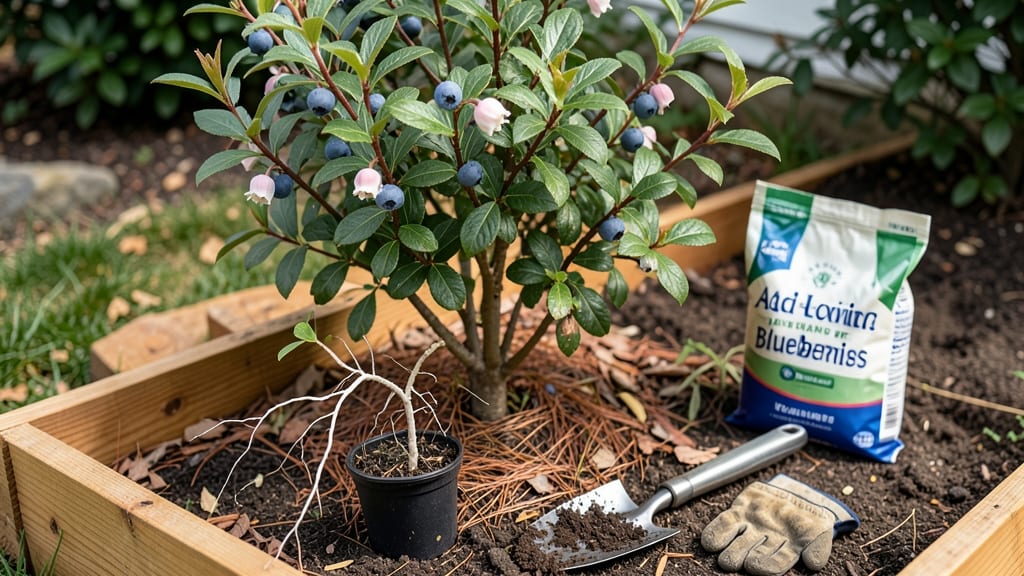
Starting blueberry plants from nursery stock means you’ll be harvesting sweet, plump berries in just 2-3 years—no waiting a decade for seed-grown plants to fruit. 🌱 I’ve grown blueberries from both seeds and transplants, and the difference in timing (and flavor) is night-and-day.
The key? Picking the right variety for your climate and giving them the acidic soil they crave from day one.
You’ll need a sunny spot with 6+ hours of morning sun (afternoon shade helps in hot zones), well-draining soil with a pH between 4.5 and 5.5, and a spot where the roots won’t dry out. Most beginners skip the soil test—big mistake.
Blueberries hate alkaline soil, and without adjusting it, you’ll get stunted growth and bitter berries. The good news? Amending soil is easier than you think with a few simple supplies.
Once planted, keep the soil consistently moist (not soggy) for the first year, mulch heavily to retain moisture, and prune in late winter to open up the center. Within 12 months, you’ll see new canes forming, and by year two, those canes will start bearing fruit.
The first harvest might be small, but it’s worth the wait—imagine pounds of berries from a single plant.
For beginners, transplants are the way to go—they’re cold-hardy, disease-resistant, and start producing faster. Seed-grown plants take years to fruit and often lack the disease resistance of named varieties. Stick with nursery plants, and you’ll be enjoying blueberry pancakes in no time.
📚 In This Guide
- What you need
- Instructions
- Tips and common mistakes
- Wrapping up and next steps
What you need
- ● Blueberry plants: Choose cold-hardy varieties like Top Hat, Patriot, or Bluecrop. Buy 1–3 plants (depending on space and desired yield).
- ● Well-draining soil: Mix 50% peat moss or coconut coir with 50% sandy loam or compost (pH 4.5–5.5). Test soil pH with a soil test kit.
- ● Organic mulch: 3–4 inches of pine bark or wood chips to retain moisture and acidify soil.
- ● Fertilizer: Acid-loving plant fertilizer (e.g., Miracle-Gro Azalea, Camellia & Rhododendron) or organic options like cottonseed meal (1 lb per plant).
- ● Garden tools: Trowel or hand shovel
- ● Garden gloves
- ● Pruning shears (sterilized)
- ● Watering can or hose with a gentle spray nozzle
- ● Containers (if growing in pots): 10–15 gallon pots with drainage holes (for dwarf varieties).
- ● Epsom salt: 1 tbsp per plant (annually) to boost magnesium levels.
- ● Blueberry plant food: Slow-release granules for convenience.
- ● Drip irrigation system: For consistent watering in dry climates.
- ● Row cover or frost cloth: To protect young plants from late frosts.
- ● Blueberry companion plants: Thyme, clover, or comfrey to improve soil health.
Step-by-step guide to starting a cold-hardy blueberry plant
Here’s the straightforward method I’ve used to establish thriving blueberry bushes in colder climates—no fancy equipment needed.
🌱 Step 1: Select the Right Variety and Planting Location
Cold-hardy blueberry varieties like ‘Patriot,’ ‘Bluecrop,’ or ‘Jersey’ thrive in zones 3-6. These cultivars handle winter temperatures down to -20°F without losing productivity. Choose a site with full sun (at least 6-8 hours daily) and well-draining soil—blueberries despise soggy roots. Test your soil pH: it should be between 4.5 and 5.5 (acidic). If it’s higher, amend with sulfur or peat moss before planting.
I always dig a hole twice as wide as the root ball but only as deep as the container’s base. This encourages root expansion horizontally, which blueberries love. Avoid planting near large trees or shrubs—their roots compete aggressively for moisture and nutrients.
🪴 Step 2: Prepare the Soil and Plant Correctly
Mix the hole’s native soil with equal parts peat moss or pine bark fines to maintain acidity and improve drainage. For the 4 plants you’re starting, you’ll need about 10 gallons of amended soil total. Avoid compost or manure—these raise pH and harm blueberries. Place the plant so the root flare (where roots meet the stem) sits just above soil level. Backfill gently, tamping down lightly to eliminate air pockets.
Water deeply right after planting—1 gallon per plant—to settle the soil. Mulch with 2-3 inches of pine needles or wood chips around the base (but not touching the stem). This mimics their natural forest floor habitat and slowly acidifies the soil over time. I check mulch thickness annually and refresh if it breaks down.
☀️ Step 3: Water and Fertilize for Establishment
Blueberries need consistent moisture but hate wet feet. Water deeply 2-3 times per week during the first growing season, aiming for 1-1.5 inches of water per week. You’ll know you’ve got it right when the top 2 inches of soil feel damp but not saturated. Overwatering causes root rot, which kills plants quickly. In containers, water when the soil feels dry to the touch 1 inch below the surface.
Wait 4-6 weeks after planting before fertilizing. Then, use a slow-release, acid-loving plant fertilizer (like 7-7-7 or specifically formulated for blueberries) in early spring. Apply half the recommended dose the first year—blueberries are sensitive to excess salts. I fertilize again in mid-summer with a light application of cottonseed meal for organic nitrogen.
✂️ Step 4: Prune and Protect for Winter Readiness
Prune in late winter or early spring before new growth begins. Remove dead, diseased, or crossing branches, cutting back to the nearest healthy bud. For young plants, shape lightly to encourage an open center—this improves air circulation and fruit production. Avoid heavy pruning in the first year; focus on establishing the plant’s structure. You’ll see new growth emerging from the base in spring as a sign of strong roots.
In colder zones, protect young plants from winter desiccation (where wind burns tender stems). Wrap the base with burlap or frost cloth in late fall, and add a 4-inch layer of mulch over the root zone. I also mound soil 2-3 inches high around the stem for extra insulation. Remove protections in early spring once daytime temperatures consistently stay above 40°F.
⏰ Step 5: Harvest and Maintain for Long-Term Success
Blueberries ripen in late summer, usually 60-90 days after flowering. You’ll know they’re ready when they easily detach from the stem with a gentle tug and turn a deep, uniform blue. Harvest in morning hours when berries are coolest to preserve flavor and texture. Spread a breathable fabric under the bush to catch fallen berries—this prevents bruising and makes cleanup easier.
After harvest, apply 1 inch of compost (only if pH remains below 5.5) and replenish mulch. Test soil pH annually—blueberries are finicky about acidity. If pH drifts above 5.5, amend with elemental sulfur in early fall. With proper care, your bushes will produce for 30-50 years, rewarding patience with pounds of sweet, antioxidant-rich fruit each season.
Tips & tricks for starting cold-hardy blueberry plants
These practical tips will help you avoid common pitfalls and maximize your blueberry bushes' success in colder climates.
Variety Selection: When choosing between ‘Patriot,’ ‘Bluecrop,’ or ‘Jersey,’ consider your specific climate zone. ‘Patriot’ handles the coldest temperatures down to -25°F, making it ideal for zones 3-4, while ‘Bluecrop’ and ‘Jersey’ are better suited for zones 4-6. I've found that planting a mix of these varieties can extend your harvest season by 2-3 weeks, as they ripen at slightly different times.
Soil Preparation: The acidity of your soil is absolutely critical—blueberries won't thrive if the pH isn't between 4.5 and 5.5. I recommend testing your soil before planting and adjusting with sulfur or peat moss if needed. For the 10 gallons of amended soil required for 4 plants, mix equal parts native soil with peat moss or pine bark fines. This creates the perfect acidic environment while improving drainage, which prevents the root rot that can kill blueberry plants.
Planting Depth: Getting the planting depth right is crucial. The root flare should sit just above soil level—this prevents the roots from suffocating while allowing the stem to remain exposed. I've learned this the hard way after planting too deeply and seeing stunted growth. Dig a hole twice as wide as the root ball but only as deep as the container's base, then backfill gently to avoid compacting the soil around delicate roots.
Winter Protection: In colder zones, protecting young plants from winter desiccation is non-negotiable. The 4-inch layer of mulch over the root zone combined with a 2-3 inch soil mound around the stem creates an insulating barrier that prevents windburn. I've seen plants survive -20°F winters with this protection, while unprotected plants often suffer winter damage. Remove protections in early spring once daytime temperatures consistently stay above 40°F to allow new growth to emerge.
Pro Tips for Start A Blueberry Plant
- These practical tips will help you avoid common pitfalls and maximize your blueberry bushes' success in colder climates.
- Variety Selection: When choosing between ‘Patriot,’ ‘Bluecrop,’ or ‘Jersey,’ consider your specific climate zone. ‘Pa...
- Soil Preparation: The acidity of your soil is absolutely critical—blueberries won't thrive if the pH isn't between 4....
Frequently asked questions
Got questions about growing your own blueberry plant? You’re not alone! Here are some of the most common queries—and their straightforward answers—to help you get started with confidence.
Can I grow blueberries in a pot instead of planting them in the ground?
Blueberries thrive in containers as long as the pot is at least 12–18 inches deep and has drainage holes. Use a well-draining, acidic soil mix (pH 4.5–5.5) and place the pot in a sunny spot. Dwarf varieties like Top Hat or Peach Sorbet are perfect for pots. Just keep an eye on watering—potted plants dry out faster!
How long does it take for a blueberry plant to produce fruit?
Patience is key! Most blueberry bushes take 2–3 years to bear fruit after planting, though some varieties (like Bluecrop) may produce a few berries in the first year if well-cared-for. Prune regularly to encourage bushier growth and better yields. Pro tip: Fertilize with an acidic, slow-release fertilizer in early spring to speed up fruiting.
Are blueberry plants cold-hardy? Can they survive winter?
Yes! Many blueberry varieties are tough as nails—some, like Jersey or Patriot, handle temperatures down to -20°F (-29°C). To protect young plants, mulch heavily with pine needles or straw in late fall. Avoid heavy pruning in winter, as buds form on old wood. Bonus: Evergreen varieties (like Elliott) stay green year-round, adding winter interest to your garden!
What pests or diseases should I watch out for?
Blueberries are generally low-maintenance, but keep an eye out for spider mites, aphids, and blueberry maggots. For mites, spray with water or use neem oil. Maggots? Cover plants with fine mesh netting in late spring. Fungal issues like mummy berry can be prevented by removing fallen fruit and ensuring good airflow. Quick fix: Prune for sunlight and avoid overhead watering.
Do I need more than one blueberry plant to get fruit?
Most blueberries are self-pollinating, meaning one plant can produce fruit on its own. However, planting two different varieties nearby (like Bluecrop and Chester) can boost yields and improve flavor through cross-pollination. If space is tight, stick with one plant—it’ll still give you a harvest!
Wrapping up and next steps
Starting your own blueberry plant is a rewarding journey that brings sweet, antioxidant-rich berries right to your doorstep! 🌱 With the right cold-hardy variety and a few key steps—like selecting acidic soil, proper spacing, and consistent watering—you’ll be well on your way to a thriving bush.
Whether you’re a beginner or a seasoned gardener, patience and care will turn those tiny plants into bountiful harvests year after year.
Now that you’re armed with knowledge, take the next step—grab those gloves, pick your favorite variety, and get planting! Watch your garden transform into a blueberry paradise, and soon, you’ll be sharing (or savoring!) homemade jams, pies, and fresh snacks with pride. Happy growing! 🌟