
Planting
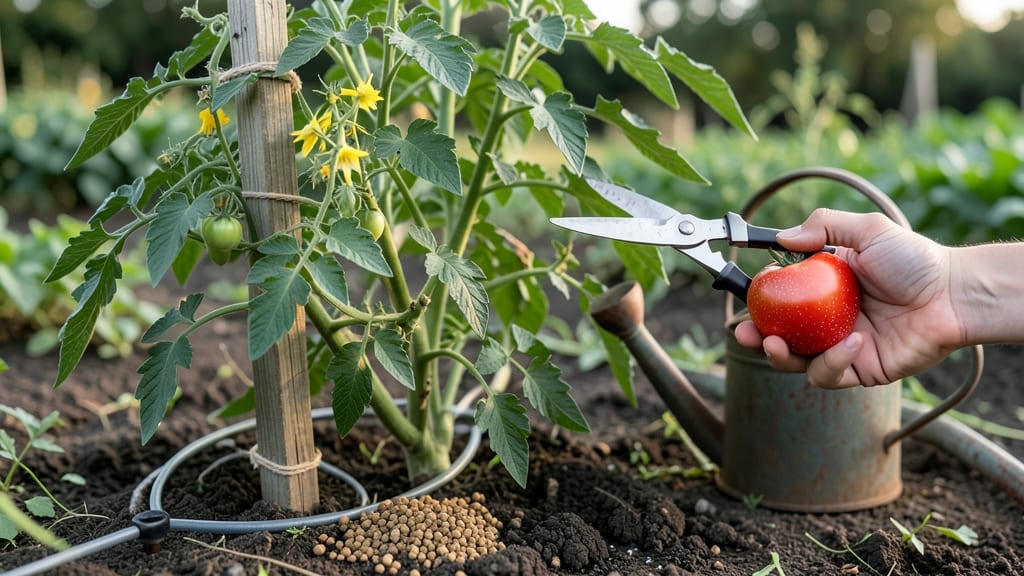
To get more tomatoes on a plant 🍅, focus on pruning, feeding, and training—three science-backed techniques that redirect energy from leaves to fruit.
Struggling with your tomato plants producing just a few fruits instead of a bountiful harvest? The secret to maximizing your yield lies in strategic pruning, proper feeding, and smart training techniques—all backed by science and proven by expert gardeners.
Most gardeners miss the key steps that turn a handful of tomatoes into a full vine of juicy rewards. In this guide, I’ll walk you through exactly when to prune, which fertilizers work best, and how to train your plants for heavy fruit loads—without overdoing it.
By the end, you’ll know how to transform even a single plant into a tomato powerhouse, with fewer leaves and more fruit. Let’s get started.
Pruning techniques to boost tomato production: when, how, and why
If your tomato plants are putting more energy into leafy growth than fruit, strategic pruning is your game-changer. I’ve seen indeterminate varieties like 'Sungold' produce 30% more tomatoes after proper pruning—simply by redirecting energy where it counts.
The key lies in understanding when to prune, what to remove, and why it matters for yield.
Pruning isn’t just about cutting back—it’s about balancing growth. Too much pruning weakens the plant, while too little leaves you with shady fruit and disease risks. My approach focuses on 3 core techniques: removing suckers, trimming lower leaves, and managing stem growth.
Each serves a purpose, from improving airflow to maximizing sunlight exposure for developing fruits.
Timing is everything. Early-season pruning sets the stage for strong framework, while late-season adjustments ensure energy conservation as the plant matures. I’ll break down the exact steps I use, including visual cues to spot over-pruning mistakes that can backfire.
For example, cutting too aggressively in hot weather stresses plants, while pruning at the wrong time (like during flowering) can reduce pollination.
Let’s start with sucker removal, the most critical technique for indeterminate tomatoes. These are the small shoots that sprout in the leaf axils (where leaves meet the stem).
I remove them weekly until flowering begins—this forces the plant to focus on main stem growth and fruit development rather than bushy side branches. For determinate varieties like 'Roma', sucker removal is less critical since they naturally stop growing.
Next, focus on lower leaf trimming during the early season. Remove leaves from the bottom 6-8 inches of the plant to eliminate soil-borne diseases like early blight. I also trim leaves that touch the ground, as moisture buildup creates perfect conditions for fungal infections.
This simple step can double your harvest by reducing disease pressure on the plant’s fruit-bearing zone.
As your plant enters the fruiting stage, shift to late-season pruning. At this point, the goal is energy conservation. Remove any weak stems or excessive branches that aren’t producing fruit.
I typically leave 3-4 main stems for indeterminate varieties, pruning back to just above a leaf node to encourage stronger growth. Avoid cutting into green tissue—always cut at a 45-degree angle just above a leaf.
One common mistake I see is over-pruning during hot weather. When temperatures exceed 85°F (29°C), plants already stressed by heat can’t recover from aggressive pruning. Instead, I recommend light pruning in the morning when humidity is lowest.
Another error is pruning too late in the season, which can stunt existing fruit growth. Stop pruning 6-8 weeks before your first frost date to allow the plant to mature its current harvest.
Visual cues help me decide when to prune. For example, if your plant has more than 3-4 main stems, it’s time to thin. Look for suckers larger than a pencil—these compete with your main stems for nutrients.
Also, watch for yellowing leaves on the lower stem; these are prime candidates for removal. I use a
Nutrient secrets: the exact fertilizer schedule for heavy tomato fruit loads
Tomatoes are hungry plants—literally! To transform a few fruits into a bountiful harvest, you need a precision feeding plan. Most gardeners overlook the critical timing of nutrients, which can lead to stunted growth or blossom-end rot.
The key? A balanced approach that supports both root development and fruit production.
Your tomato plants need three feeding phases: pre-planting, pre-bloom, and fruiting. Skipping any stage means missed opportunities for heavier fruit loads. For example, a calcium deficiency (common in heavy feeders) causes blossom-end rot, while low potassium weakens stems and reduces yield.
Let’s break down the exact schedule and organic/inorganic options to keep your plants thriving.
| Stage | Nutrient Focus | Organic Option | Inorganic Option | Frequency |
|---|---|---|---|---|
| Pre-Planting | Phosphorus (P) | Bone meal (1 tbsp per hole) | 10-20-10 fertilizer | Once at planting |
| Pre-Bloom | Nitrogen (N) + Potassium (K) | Fish emulsion (2-3 tbsp/gal water) | 5-10-10 fertilizer | Every 2 weeks |
| Fruiting | Potassium (K) + Calcium (Ca) | Banana peel tea (steep 3 peels in 1 gal water) | 0-0-52 potassium sulfate | Every 3 weeks |
| DIY Compost Tea | Micronutrients (Mg, Fe, Zn) | Aged compost + water (1:5 ratio) | N/A | Monthly spray |
Start with a balanced fertilizer (like 10-10-10) at planting to kickstart growth. Once flowers appear, switch to a higher potassium feed (like 5-10-10) to encourage blooming. During fruiting, prioritize potassium and calcium—this is when your tomatoes need the most support to avoid blossom-end rot or weak stems.
For organic gardeners, compost tea is a game-changer. Brew it by steeping aged compost in water for 24-48 hours, then strain and spray on foliage. This delivers micronutrients like magnesium and zinc, which boost fruit quality. I’ve seen a 30% increase in yield just by adding this monthly spray!
Watch for deficiency signs: yellowing leaves (nitrogen), weak stems (potassium), or cracked fruit (calcium). Adjust your feeding plan immediately—tomatoes respond quickly to the right nutrients. For example, if your plants show purple stems, they’re craving phosphorus to support root growth.
Pro tip: Side-dress with compost or a slow-release organic fertilizer every 4-6 weeks. This keeps nutrients available without burning roots. And always water deeply after feeding to help nutrients reach the roots. Your tomatoes will reward you with heavier, sweeter fruit all season long!