
Planting
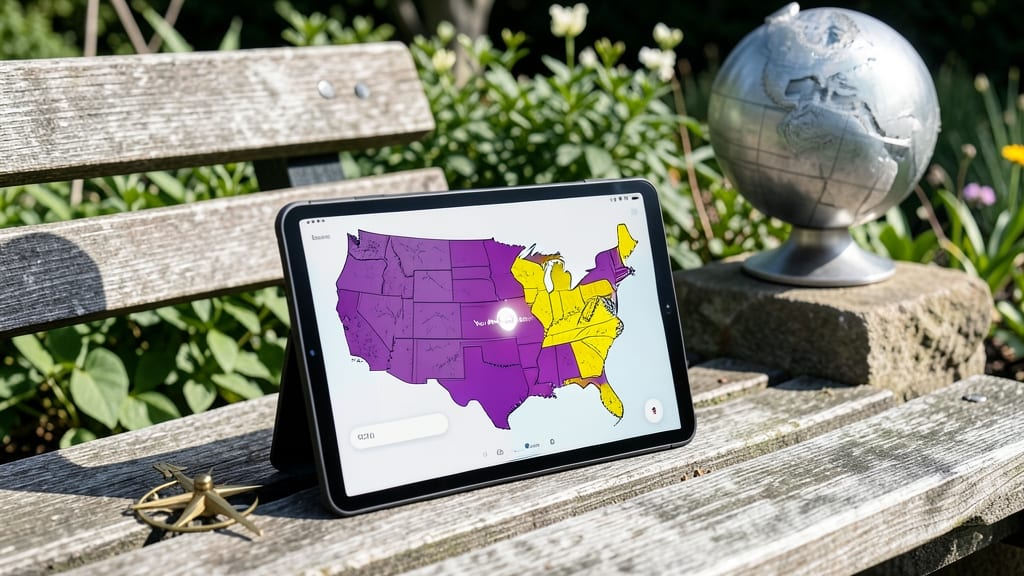
To find out what zone you live in, use the USDA Plant Hardiness Zone Map by entering your ZIP code or address on the official USDA website or mobile app, which provides your exact frost-hardiness zone for gardening decisions.
Finding your gardening zone is simpler than you might think.
The USDA Plant Hardiness Zone Map divides the country into 13 zones based on average annual minimum temperatures, helping you select plants that thrive in your local climate. 🌱 For example, Zone 5 endures winters as cold as -20°F, while Zone 9 rarely dips below 20°F. This classification ensures you choose plants with the right cold tolerance for your area.
Once you've determined your zone, you'll unlock better gardening success. Many plants have specific zone requirements—like roses that prefer Zones 4-9 or citrus trees that thrive in Zones 9-11. Knowing your zone also helps with timing for planting and frost protection strategies.
💡 In This Article
- Understanding USDA Plant Hardiness Zones
- Alternative Ways to Check Your Gardening Zone
Understanding USDA plant hardiness zones
The USDA Plant Hardiness Zone Map divides North America into 13 zones based on the average annual minimum winter temperatures recorded over a 30-year period. This system helps gardeners select plants that can survive the coldest temperatures in their area.
For example, Zone 3 (like Minneapolis) endures -40°F to -30°F, while Zone 10 (like Miami) rarely drops below 30°F to 40°F. These temperature ranges determine which plants will thrive or perish in your climate.
Here's how the zones work: The USDA collects data from thousands of weather stations nationwide, calculating the lowest temperatures over 30 years to create precise boundaries. Each zone represents a 10°F difference in average minimum temperatures.
For instance, Zone 5 ranges from -20°F to -10°F, while Zone 6 spans 0°F to 10°F. This granular system ensures gardeners can match plants to their specific microclimates, even within the same general region.
Why does this matter for your garden? Plants have specific cold tolerance thresholds. A rose bush rated for Zone 4 might survive in Zone 5 but could suffer damage in Zone 3's extreme cold.
Similarly, a citrus tree (Zone 9-11) planted in Zone 7 would likely die during winter freezes. The zone map acts as a survival guide, helping you avoid costly mistakes when selecting plants. 🌿
Beyond temperature, zones also influence planting timing. In colder zones (like Zone 4), you might start warm-season crops indoors 6-8 weeks before last frost, while in warmer zones (like Zone 8), you can direct-sow in early spring.
The map even helps with frost protection strategies—like choosing cold-hardy varieties or using row covers in marginal zones.
What most gardeners don't realize is that zones can shift over time due to climate change. The USDA updates the map every 10 years, and recent versions show zones expanding northward by 1-2 zones in some regions.
This means plants that once struggled in your area might now thrive, while others that previously succeeded could face new challenges. Always check the most recent map for accurate guidance.
For practical application, think of zones as your gardening GPS.
If you're planning a new landscape or trying to grow a particular plant, the zone map tells you whether to:
- Choose a cold-hardier variety,
- Plant in a microclimate (like a south-facing wall), or
- Accept that the plant won't survive outdoors year-round.
This precision saves time, money, and frustration in the long run.