
Planting
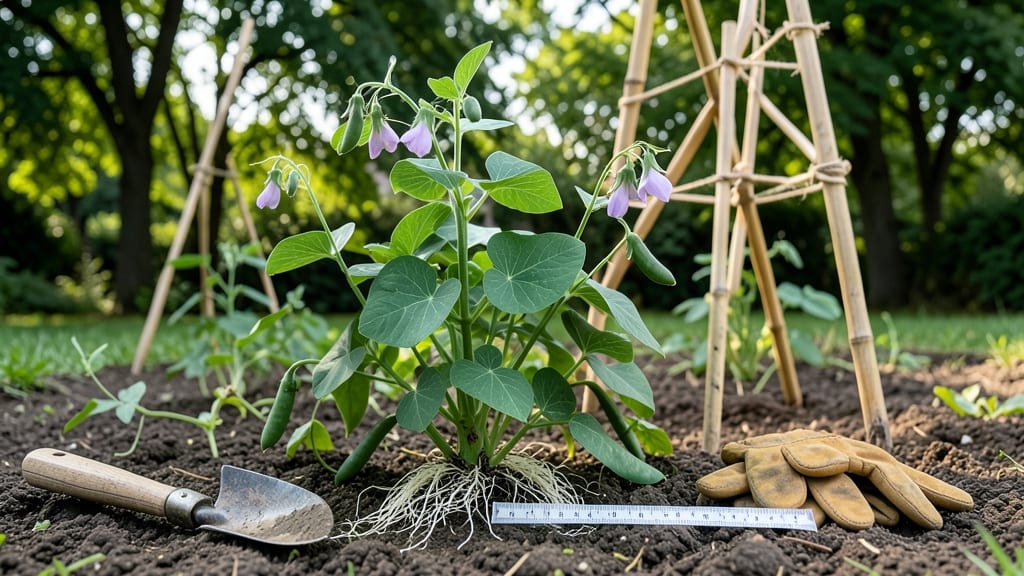
Planting sugar snap peas ½ inch to 1 inch deep is the secret to fast germination and strong vines 🌱 — too shallow, and they dry out; too deep, and they struggle to break through.
If you’ve ever watched your sugar snap pea seeds sit in the soil for weeks without sprouting, you’re not alone. The right depth isn’t just about following a rule—it’s about moisture, soil texture, and even the time of year you’re planting.
In this guide, I’ll break down the perfect planting depth for your climate, whether you’re in loamy soil or sandy ground, and how to adjust for slow germination.
You’ll also learn why trellis support matters early and how to avoid the three most common mistakes that kill your yield before it starts.
By the end, you’ll have a foolproof method to get your sugar snap peas off to a fast, strong start—no more guesswork, just crisp pods ready to harvest in 60 days or less.
Optimal sugar snap pea planting depth for fast germination & strong growth
Getting your sugar snap peas off to a strong start begins with the right planting depth. These cool-season crops need just the perfect balance—too shallow, and they’ll dry out; too deep, and they’ll struggle to push through the soil.
The ideal depth for sugar snap pea seeds is between ½ inch and 1 inch, but why? It all comes down to their tiny size and moisture needs.
Sugar snap pea seeds are small—about ¼ inch wide—so they don’t need much soil to cover them.
Planting them too deep (over 1.5 inches) forces the seedlings to work harder to reach the surface, which can delay germination by 3-5 days or even cause rotting if the soil stays too wet.
On the flip side, planting them too shallow (¼ inch or less) risks exposing them to drying winds or uneven moisture.
The ½-inch to 1-inch range keeps seeds in a sweet spot: protected from drying out while still close enough to the surface for quick germination. This depth also ensures consistent moisture, which is critical since sugar snap peas thrive in cool, damp conditions.
Think of it like tucking them into a cozy blanket—just enough coverage to stay snug but not suffocated.
Here’s a quick rule of thumb: use your finger as a guide. Press the seed into the soil until it’s covered by the depth of your nail bed (½ inch) or just under your first knuckle (1 inch).
For loamy soil, aim for the ½-inch mark; for sandy soil, which drains faster, go closer to 1 inch to hold moisture longer.
| Factor | Ideal Planting Depth | Why It Matters |
|---|---|---|
| Seed Size | ½ inch to 1 inch | Small seeds need minimal coverage to avoid rotting. |
| Soil Type | ½ inch (loam), 1 inch (sandy) | Adjusts for moisture retention and drainage. |
| Moisture | Consistent dampness | Seeds need steady moisture but not waterlogging. |
| Germination Speed | 5-10 days | Optimal depth ensures fast, even sprouting. |
| Seedling Strength | Strong stems | Avoids weak, leggy growth from poor light access. |
If your soil is heavy clay, which compacts easily, consider planting seeds at ½ inch deep and gently pressing the soil around them to create a small air pocket. This helps prevent suffocation while still keeping them moist.
For container gardening, use a well-draining mix and stick to the ½-inch mark—containers dry out faster, so deeper planting can lead to moisture loss.
One of the biggest mistakes I see is planting seeds too deep in an attempt to "protect" them. While it might seem logical, especially in windy conditions, over-deep planting can lead to rotten seeds or seedlings that emerge with curved, weak stems (a condition called "hook neck").
Always err on the shallower side unless your soil is particularly dry or sandy.
To troubleshoot slow germination, check three things: soil temperature (ideally 60-70°F), moisture (keep soil damp but not soggy), and seed freshness (old seeds may take longer). If your seeds haven’t sprouted in 10-14 days, gently scratch the soil surface to see if they’ve rotted.
If they have, replant with fresh seeds at the correct ½-inch depth.
Once your sugar snap pea seedlings emerge, thin them to 2-3 inches apart to give each plant room to grow. This spacing also improves airflow, reducing the risk of fungal diseases like powdery mildew.
Pair this with a trellis or stakes to support their vining habit—strong vertical growth starts with a solid foundation, and that begins with the right planting depth.
Pro tip: After planting, lightly water the soil to settle it around the seeds. Use a fine mist or watering can with a gentle spray to avoid displacing the seeds.
Consistency is key—sugar snap peas need steady moisture to germinate quickly and grow into robust vines ready for harvest in 60-70 days. 🌱
How soil type affects sugar snap pea planting depth: loamy vs. sandy vs. clay
Your sugar snap pea seeds need the right planting depth to break through soil and grow strong vines—but soil type changes everything. Loamy soil holds moisture perfectly, while sandy soil drains too fast, and clay soil can suffocate roots.
Adjusting depth by just ¼ inch can mean the difference between fast germination and weak seedlings.
In loamy soil, the ideal depth is ½ to 1 inch—this balances moisture and aeration. But in sandy soil, plant seeds ¼ inch deeper to prevent them from drying out before sprouting.
Meanwhile, clay soil requires shallower planting (⅜ inch max) to avoid compacted conditions that slow root growth.
| Soil Type | Planting Depth | Adjustments Needed | Root Development |
|---|---|---|---|
| Loamy | ½–1 inch | None (ideal) | Strong, balanced |
| Sandy | ¾–1¼ inch | Add compost | Faster but shallow |
| Clay | ⅜–½ inch | Amend with sand | Slow, compacted |
If your sandy soil drains too quickly, mix in 2 inches of compost before planting to retain moisture. For clay soil, add coarse sand or perlite to improve aeration—this prevents roots from suffocating.
Test your soil’s drainage by digging a 6-inch hole and filling it with water; if it drains in 1 hour, it’s too sandy.
Watch for signs your soil needs amendments: yellowing leaves mean poor drainage, while crusty soil after rain signals clay compaction. Loamy soil should crumble easily when damp—if yours doesn’t, it’s time to adjust.
Even a small change in depth or soil structure can boost your sugar snap pea yield by 30%.
Pro tip: Plant seeds in furrows 1 inch deep for all soil types, then cover with fine mulch. This keeps moisture consistent while allowing roots to establish evenly. Trellis support is key—regardless of soil, vines need vertical space to thrive.
Remember, soil temperature matters too—wait until it reaches 50°F before planting. Cold soil slows germination, no matter how deep you bury seeds. With the right adjustments, your sugar snap peas will sprout in 7–14 days and produce sweet pods all season. 🌱