
Planting
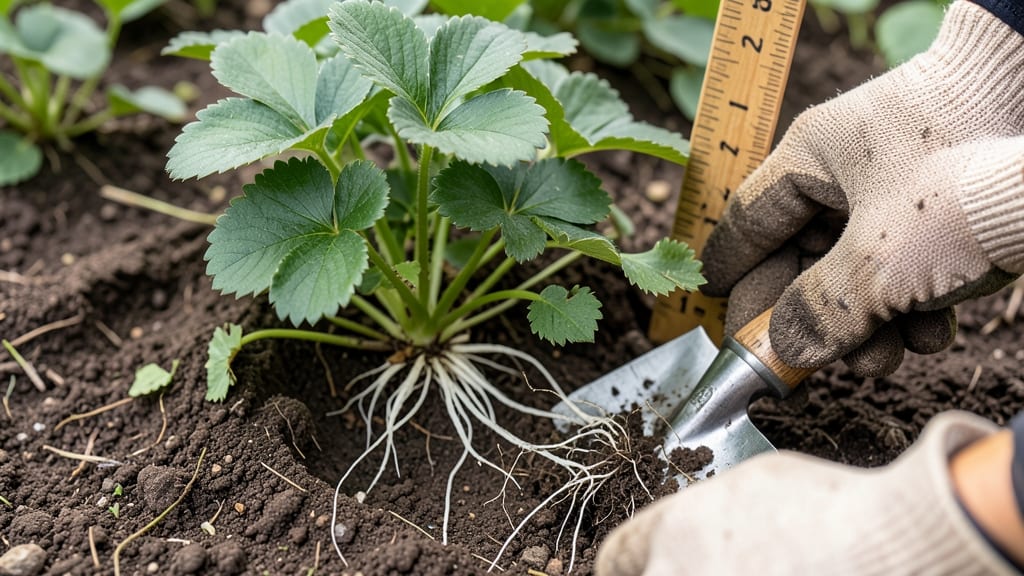
Planting strawberry roots at the right depth is the secret to strong plants and a bountiful harvest—too shallow or too deep, and you risk stunted growth or rot.
Struggling to grow thriving strawberry plants? The depth at which you bury those delicate roots can make or break your harvest—and most gardeners get it wrong.
One inch too deep, and the crown rots; too shallow, and the roots dry out. The 3-zone method ensures your 🍓 thrive from day one.
Why does depth matter so much? Strawberry roots need just enough soil to anchor them without suffocating. The crown—the critical junction where leaves meet roots—must sit at soil level, never buried. Too much soil smothers the plant, while too little leaves it vulnerable to heat and drought.
In this guide, I’ll walk you through the exact depth for each strawberry variety, how to adjust for your soil type, and the 3 common mistakes that sabotage even the most well-intentioned gardeners. By the end, you’ll know exactly where to place those roots for plants that flourish.
The 3-Zone planting depth guide for strawberry roots
Planting strawberries at the right depth isn't just about burying the roots—it's about creating the perfect conditions for root health, fruit production, and disease prevention. I've seen gardeners struggle with rotten crowns or stunted growth simply because they planted too deep or too shallow.
The key lies in understanding the three critical zones of strawberry roots: the crown, the root ball, and the soil line.
Strawberries are delicate plants, and their crown (the area where leaves meet roots) is especially sensitive. When planted correctly, this zone stays just above the soil line, allowing for proper air circulation and preventing fungal infections.
The roots themselves need a cozy spot where they can spread without being smothered, while the soil line should be marked clearly to avoid over-planting.
Here’s the science behind it: strawberry roots thrive in well-aerated soil with a neutral pH (6.0-7.0). When roots are buried too deep, they suffocate, leading to root rot.
Conversely, shallow planting exposes the crown to drying out and temperature fluctuations. The 3-zone method ensures balance, giving your plants the best chance to flourish.
Let’s break down the zones with a clear visual guide to help you plant strawberries like a pro. This summary-table will show you exactly where each part of the plant belongs in the soil.
| Zone | Plant Part | Depth from Soil Line | Key Notes |
|---|---|---|---|
| Zone 1 | Crown | At soil level | Never bury; must stay exposed for air circulation |
| Zone 2 | Root Ball | 1/3 buried in soil | Encourages root spread without suffocation |
| Zone 3 | Soil Line | 1-2 inches below crown | Mark with mulch to avoid over-planting |
Now that you’ve got the zones down, let’s talk about why this matters. The crown is the plant’s lifeline, and burying it too deep can lead to crown rot, a fungal disease that kills plants quickly.
On the flip side, leaving it exposed can cause the plant to dry out or overheat, especially in hot climates. The 1/3 buried root ball in Zone 2 gives roots room to expand while staying snug enough to establish quickly.
For June-bearing varieties, like 'Jewel' or 'Chandler', precise depth is crucial because they produce all their fruit in one season. Everbearing types, like 'Albion' or 'Seascape', are slightly more forgiving but still benefit from proper depth to support continuous fruiting.
Always check the plant tag for variety-specific advice, but the 3-zone method works universally.
One common mistake I see is gardeners burying the crown too deep, thinking it’ll provide extra support. But this actually strangles the plant. Instead, use mulch around the base (but not touching the crown) to retain moisture and regulate temperature.
Organic mulch, like straw, also adds nutrients as it breaks down, giving your strawberries a slow-release fertilizer boost.
If you’re planting in containers, follow the same zones but adjust for the smaller space. Use a well-draining potting mix and ensure the container has drainage holes.
The crown should still sit at the soil line, with roots spreading into the mix. Containers dry out faster, so monitor moisture closely during the first few weeks.
After planting, give your strawberries a deep watering to settle the soil around the roots. Avoid wetting the leaves to prevent fungal diseases. In the first week, keep the soil consistently moist but not soggy—this helps the roots establish without stress.
Once your plants are settled, you’ll see new leaves and stronger runners, signaling healthy growth.
Remember, the goal is to create a balanced environment where roots can breathe, the crown stays healthy, and the plant has room to thrive. With the 3-zone method, you’ll avoid the most common pitfalls and set your strawberries up for a bountiful harvest. Happy planting! 🌱
Common mistakes that kill strawberry plants (and how to fix them)
Strawberry plants are surprisingly delicate when it comes to planting depth and spacing. I've seen gardeners accidentally bury the crown too deep, leaving plants struggling to emerge—or worse, planting them too shallow, which exposes roots to extreme temperatures.
These mistakes often lead to poor yields or even plant death, especially in the first critical growing season.
One of the biggest killers is overcrowding. Many gardeners plant strawberries too closely together, thinking more plants mean more berries. But this creates competition for nutrients and air circulation, inviting fungal diseases like gray mold.
The ideal spacing is 12-18 inches apart in rows spaced 3-4 feet apart for proper airflow and sunlight penetration.
Another frequent error is planting strawberries in poorly amended soil. Strawberries thrive in well-draining, slightly acidic soil (pH 5.5-6.8). If your soil is heavy clay or sandy, you'll need to mix in organic matter like compost or peat moss before planting.
Skipping this step often leads to root rot or nutrient deficiencies that stunt growth.
🚨 callout-warning 🚨
The crown (where leaves meet roots) must sit just at soil level—never buried or exposed. Burying too deep causes rot, while planting too shallow exposes roots to drying out. Use this rule: 1/3 of the root ball should be below soil, with the crown at ground level.
Let's talk about soil-related mistakes that silently sabotage strawberries. Many gardeners reuse the same soil year after year without replenishing nutrients. Strawberries are heavy feeders and deplete soil quickly. I recommend adding aged compost or a balanced 10-10-10 fertilizer at planting time, then side-dressing with compost in early spring. Without this, plants look healthy but produce tiny, bland berries.
For container growers, the biggest mistake is using pots that are too small. Strawberries need at least 5-gallon containers to develop strong roots. Smaller pots restrict growth and reduce fruit production. Also, ensure containers have drainage holes—waterlogged roots are a leading cause of plant failure in pots.
Finally, don't overlook the importance of mulching. Many gardeners skip this step, leaving soil exposed to temperature swings. Apply 2-3 inches of straw mulch around plants (keeping it 2 inches away from the crown) to retain moisture, suppress weeds, and protect roots from extreme heat or cold.
This simple step can double your harvest!