
Planting
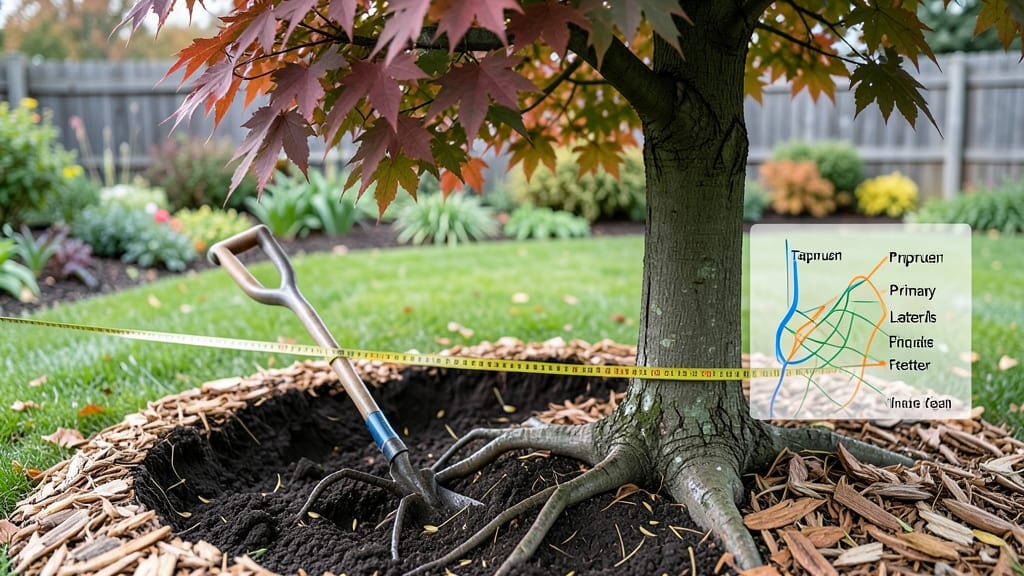
Maple tree roots extend surprisingly deep and wide—often reaching 3 to 5 feet down and spreading up to 50 feet from the trunk, depending on the species and soil.
Planting a maple tree in your yard can add stunning fall color—but if you don’t account for its root system, you risk damaging sidewalks, driveways, or even your home’s foundation. Understanding how deep maple tree roots grow (and how far they spread) is the first step to safe, long-term landscaping.
Most gardeners assume roots grow straight down, but the truth is far more complex. While mature maple trees rarely exceed 3 feet in depth, their lateral roots spread aggressively, which is why proper spacing is critical before planting.
A sugar maple’s roots, for example, can extend 3 times wider than its canopy, making them a major consideration near structures.
In this guide, I’ll break down root depth by species, explain how soil type and age affect growth, and share practical tips for planting zones—so you can avoid costly mistakes and enjoy your maple tree’s beauty for decades.
How deep maple tree roots grow: species-specific depths explained
When planting a maple tree, most gardeners focus on the stunning foliage and height—but the root system determines long-term success. Maple roots rarely grow deeper than 3 feet, but they spread aggressively up to 3x the canopy width.
This 30-50% rule means a 50-foot-tall tree can have roots extending 50-75 feet horizontally.
Soil type plays a huge role: clay soil restricts vertical growth, forcing roots to spread wider, while sandy soil allows deeper penetration. Age also matters—young saplings develop shallow roots, but mature trees form a dense network just 12-24 inches below the surface.
Here’s how different maple species compare in root depth and spread:
The 30-50% rule is critical for planning: 30% of roots grow in the top 12 inches, while 50%+ spread horizontally in the top 2 feet. This means surface roots can damage driveways or foundations if planted too close.
For young maple trees, focus on protecting the root flare (where roots meet the trunk). Use mulch rings (3-4 inches thick) to retain moisture and prevent soil compaction. Avoid piling mulch against the trunk—this can suffocate roots.
In clay-heavy soil, consider deep tilling before planting to encourage deeper root growth. For sandy soil, add organic matter like compost to improve moisture retention. Both adjustments help roots penetrate deeper, reducing horizontal spread risks.
Age dramatically changes root behavior: a 5-year-old sapling may have roots only 12 inches deep, while a 30-year-old tree develops a dense network at 24-36 inches. This is why mature maples often lift sidewalks—their lateral roots are 3-5 inches wide and packed with fine feeder roots.
If you’re planting near a driveway or foundation, keep the tree at least 20 feet away from structures. For silver maples, increase spacing to 30+ feet due to their aggressive spread. Always call utility locators before digging near roots to avoid underground lines.
Pro tip: Prune surface roots annually if they encroach on hardscapes. Use a sharp spade to sever roots 6+ inches from the trunk—never closer, or you risk girdling the tree. Seal cuts with root pruning sealant to prevent disease.
Maple tree root spread patterns: how far to keep structures away
Maple trees develop extensive root systems that can spread 3-5 times wider than their canopy. A mature maple with a 50-foot canopy may have roots extending 150 feet in all directions. This aggressive spread is why proper spacing near driveways, sidewalks, and foundations is critical to prevent costly damage.
Most maple roots grow horizontally in the top 12-18 inches of soil, with only 10-20% of roots growing deeper than 2 feet. This shallow but wide root system makes them particularly prone to lifting concrete slabs and cracking foundation walls over time.
For driveways and patios, maintain a minimum 10-foot buffer from young maples, increasing to 20+ feet for mature trees. In one real-world case, a 25-year-old sugar maple lifted a 4-inch-thick concrete driveway over 5 years due to insufficient spacing.
To mitigate risks, use root barriers (buried vertically) when planting near structures. These 1-foot-deep barriers redirect roots downward while allowing 10-15% of growth through the soil. Install them 2-3 feet from the trunk and extend them 18-24 inches deep.
If you're working with an existing maple, avoid pruning large roots—this can stress the tree and increase damage risks. Instead, focus on mulching 3-4 feet from the trunk to protect shallow roots and water deeply during droughts to encourage deeper root growth.
For foundation protection, plant maples at least 25 feet from your home. If space is limited, choose dwarf varieties like 'Autumn Blaze' (reaches 20-25 feet tall) or 'Armstrong' (compact root system). Always consult a certified arborist before planting near critical structures.