
Planting
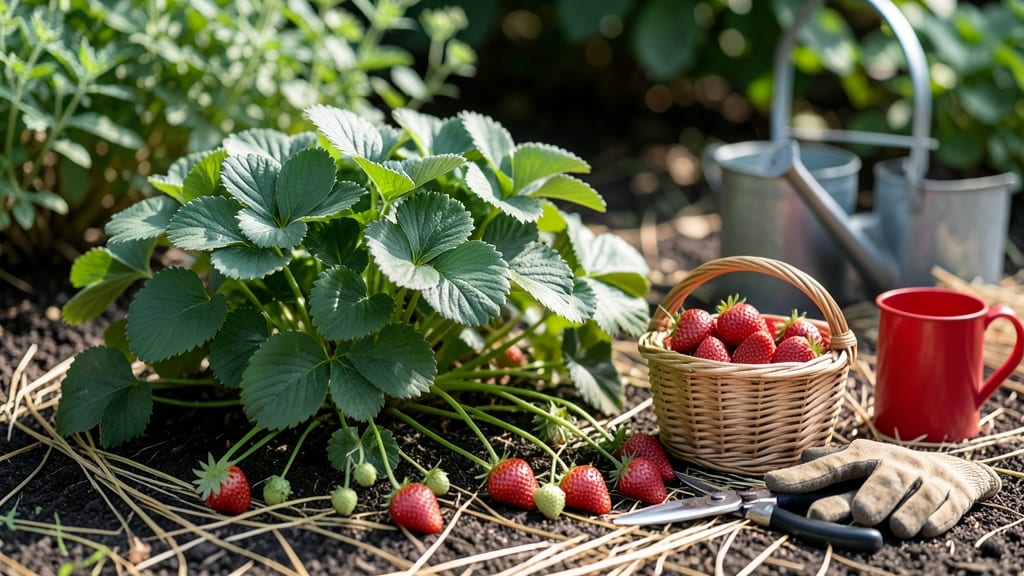
Strawberries are produced through controlled cultivation, starting with runner plants or seeds, nurtured in soil with precise spacing, watering, and sunlight exposure before harvesting ripe fruit in late spring or summer.
Strawberry production begins with careful selection of planting material—whether from seeds or established runner plants, which are more reliable for consistent yields. 🌱 The plants thrive in well-draining soil with a slightly acidic pH (around 5.5-6.5) and require at least 6-10 hours of sunlight daily to develop properly.
What sets strawberries apart is their need for winter chilling (about 300-500 hours below 45°F) to trigger flowering, a critical step often overlooked by home gardeners. Once planted, proper irrigation and mulching help protect the delicate plants from temperature swings and weeds, ensuring healthier growth and sweeter fruit.
After about 3-4 weeks of flowering, pollination occurs—either naturally by bees or manually by farmers—to produce fruit. The berries mature in roughly 25-30 days, with color shifting from green to deep red as sugars develop.
Harvesting happens when the fruit is fully colored and plump, typically between May and July in most growing zones. This precise timing ensures maximum flavor and shelf life, making strawberry farming both a science and an art.
💡 In This Article
- Strawberry Growth Stages: Seed to Fruit Development
- Best Practices for Strawberry Farming Success
Strawberry growth stages: seed to fruit development
The journey from seed to ripe strawberry begins with germination, a process that typically takes 14-21 days in optimal conditions. Strawberry seeds are tiny—each about 1mm long—and require consistent moisture and temperatures between 70-80°F to sprout.
Unlike runner plants, seeds produce less predictable varieties, so commercial growers often prefer established plants. The first true leaves appear in pairs, signaling the plant's transition from seedling to mature growth stage.
Once established, strawberries enter the vegetative growth phase, where they develop a robust root system and foliage. This stage demands 6-8 hours of sunlight daily and well-draining soil with a pH of 5.5-6.5—too acidic or alkaline soils stunt growth.
The plants also need 1-2 inches of water weekly, delivered at the soil level to prevent fungal diseases. What's fascinating is how strawberries store energy in their crowns (the base where leaves meet roots) during this phase, preparing for the next critical step.
The flowering stage kicks in after the plant receives sufficient winter chilling (300-500 hours below 45°F), a biological trigger that breaks dormancy. Each flower cluster can produce 10-20 berries, but only if pollinated—either by bees (who love strawberry flowers) or manually by farmers using paintbrushes.
The pollination process itself is delicate: the flower's stamens must transfer pollen to the pistil within 24 hours of opening, or the bloom will fall sterile. This is why commercial growers often use bee hives near fields.
After pollination, the fruit development phase begins, lasting 25-30 days until harvest. During this time, the berry's cells expand rapidly, and sugars accumulate—giving strawberries their signature sweetness. The color shift from green to red is driven by anthocyanins, pigments that develop in response to sunlight.
Interestingly, strawberries don't ripen after picking like some fruits; they're harvested at peak ripeness to ensure optimal flavor. Temperature matters here too: berries grown in cooler climates (60-70°F) develop more complex flavors than those in hotter regions.
One often-overlooked factor is the daylength sensitivity of strawberries. Short-day varieties (like 'Chandler') require 12-14 hours of daylight to flower, while day-neutral types (like 'Albion') flower regardless of daylight length. This explains why strawberries grown in northern latitudes often have shorter harvest seasons.
The interplay of light, temperature, and soil nutrients creates the perfect conditions for that iconic strawberry flavor—sweet, slightly tart, and bursting with juice.