
Planting
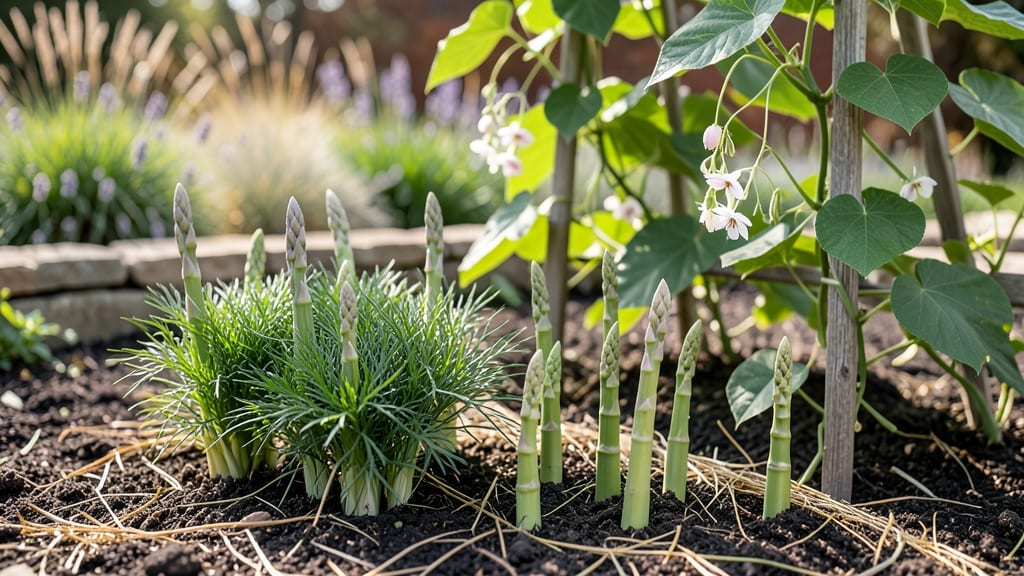
Growing asparagus and beans together isn't just possible—it's a yield-boosting duo that works better than either plant alone. 🌱 I learned this the hard way after years of struggling with asparagus that barely produced and beans that flopped in poor soil. The secret?
Their natural partnership improves soil health, deters pests, and maximizes space in your garden. Asparagus thrives in deep, well-drained soil with full sun, while beans—especially bush varieties—fix nitrogen in the air, feeding the asparagus roots.
Plant beans near asparagus crowns in early summer, and you'll see asparagus spears emerge thicker and more abundant the following spring. Runner beans climb trellises above the asparagus, creating a vertical garden that saves space and looks stunning.
By mid-summer, you'll be harvesting tender beans while the asparagus bed rebuilds nutrients for next year's harvest. The asparagus crowns grow stronger, the beans produce more pods, and weeds struggle to take hold in the dense planting. It's a low-maintenance, high-reward combo that outpaces traditional row planting.
This method works in any climate where asparagus grows (zones 3-9), whether you're planting in raised beds, in-ground rows, or even large containers. The key is patience—asperagus takes 2-3 years to establish, but once it does, the beans become the quick harvest that keeps you coming back year after year.
📚 In This Guide
- What you need
- Instructions
- Tips and common mistakes
- Wrapping up and next steps
What you need
- ● Asparagus Crowns: 3–5 healthy, disease-free crowns (choose early, mid, or late-season varieties for continuous harvests).
- ● Dry Beans (Seeds):strong> 1–2 lbs (varies by variety; opt for bush beans for easier growing).
- ● Well-Draining Soil: Amend with compost (aim for 2–3 inches mixed into the top 12 inches of soil).
- ● Fertilizer: Balanced 10-10-10 fertilizer (for planting asparagus crowns).
- ● Low-nitrogen, phosphorus-rich fertilizer (5-10-10) for beans once they sprout.
- ● Organic Mulch: Straw or shredded leaves (2–3 inches) to retain moisture and suppress weeds.
- ● Garden Tools: Trowel or hand fork (for planting crowns).
- ● Garden gloves (to protect your hands).
- ● Rake (for leveling soil).
- ● Drip irrigation system or soaker hose (for consistent watering).
- ● Row covers (to protect young plants from pests or frost).
- ● Trellis or stakes (if growing pole beans for vertical space).
- ● Compost tea or liquid seaweed fertilizer (for a nutrient boost).
Step-by-step instructions for planting asparagus and beans together
Here’s how to pair these powerhouse plants for maximum yield and minimal work.
🌱 Step 1: Prepare the Soil for Asparagus Crowns
Asparagus thrives in loose, well-draining soil with a pH of 6.5–7.5. Work in 3–4 inches of compost and a handful of 5-10-10 fertilizer per planting hole to give roots a nutrient boost. Avoid fresh manure—it can burn tender crowns. Dig trenches 12–18 inches deep and 18 inches apart, spacing crowns 12 inches apart within the trench.
Place each crown 2 inches deep with the roots spread out—this prevents crown rot while encouraging deep root growth. Cover lightly with soil and water deeply to settle everything. Asparagus takes 2–3 years to establish before harvesting, so patience here pays off later. I like to mark the trenches with landscape fabric to avoid accidentally digging into them during later planting.
🌿 Step 2: Plant Bush Beans Alongside Asparagus
Bush beans grow quickly and benefit from asparagus’s shade in summer. Wait until soil warms to 60°F (use a soil thermometer) before planting. Scatter 1–2 bean seeds per mound, 1 inch deep and 3–4 inches apart, creating mounds 6 inches tall to improve drainage. Space mounds 12–18 inches apart—this gives beans room while keeping them close enough to deter pests.
Beans fix nitrogen in the soil, which asparagus will use later. I plant beans in late spring, after the asparagus spears have been harvested for the season, to avoid competing for nutrients. Water gently after planting to avoid displacing seeds, and keep soil moist until germination (usually 7–14 days at 70°F soil temps).
☀️ Step 3: Manage Water and Light for Both Plants
Asparagus needs full sun (6+ hours daily) but appreciates afternoon shade in hot climates. Bush beans tolerate partial shade but produce best with 5–6 hours of sun. Water 1–2 inches per week, directing moisture to the asparagus crowns (beans are drought-tolerant once established). Mulch with 2 inches of straw to retain moisture and suppress weeds—this is critical in the first year when asparagus roots are shallow.
Watch for yellowing leaves on beans, which signals either overwatering or nitrogen deficiency. If leaves curl, it’s often too much heat—provide afternoon shade with a light shade cloth during peak summer. Asparagus ferns (the feathery growth after harvest) should get full sun to build next year’s spears, but beans will appreciate some relief from midday intensity.
✂️ Step 4: Harvest and Maintain for Long-Term Success
First-year asparagus: Cut spears at 6–8 inches tall when they’re 2–3 inches thick, leaving ferns to photosynthesize. Harvest for 2–3 weeks max—over-harvesting weakens crowns. Second year: Extend harvest by 2 weeks, and third year onward: You can harvest for 6–8 weeks until ferns turn yellow. Always cut spears at ground level with a sharp knife to avoid damaging crowns.
Beans mature in 50–60 days. Pick pods when they’re firm and plump—waiting too long makes them tough. After harvest, let bean plants die back naturally (or pull them) and till them into the soil to release nitrogen. This feeds asparagus roots, reducing the need for fertilizer in future years. I also add a light application of compost in early spring to replenish nutrients.
⏰ Step 5: Plan for Next Year’s Companion Pairing
Asparagus is a perennial, while bush beans are annuals, so rotate bean varieties yearly to prevent soil depletion. Try pole beans in later years—they climb and don’t compete as much for space. In fall, top-dress asparagus with 1–2 inches of compost and a low-nitrogen fertilizer (like 5-10-10) to support root growth over winter. Mark the bed clearly to avoid disturbing it during future garden prep.
This pairing works because asparagus provides early-season shade for beans, while beans feed the soil for asparagus’s long-term health. The key is patience with asparagus and quick rewards from beans—together, they create a low-maintenance, high-yield system. Real talk: The first year is the hardest, but by year three, you’ll have spears and beans producing effortlessly side by side.
Tips & tricks for perfect asparagus and bean companion planting
These companion planting secrets will help you maximize yields and minimize effort with your asparagus and beans.
Soil Preparation Insight: The 3–4 inches of compost you work into the soil for asparagus crowns should be well-aged—fresh compost can introduce harmful bacteria to tender roots. I always mix in a handful of 5-10-10 fertilizer per planting hole, but avoid overdoing it. Too much nitrogen early on encourages leafy growth at the expense of spear development. Think of this as a slow-release nutrient foundation that'll pay off in years two and three.
Planting Timing Strategy: Waiting for soil to warm to 60°F before planting beans is crucial—cold soil slows germination and can lead to rot. Use a soil thermometer for accuracy, especially in spring when temperatures fluctuate. I've found that planting beans in late spring, after asparagus harvest, creates a perfect symbiotic cycle: beans get established in warm soil while asparagus ferns provide shade to protect them from intense afternoon sun.
Water Management Hack: The 1–2 inches of weekly water you provide should be directed specifically to asparagus crowns, not the bean plants. Beans are surprisingly drought-tolerant once established, but asparagus needs consistent moisture to develop strong roots. I use a soaker hose buried slightly in the trench to deliver water directly to where the crowns need it most. This targeted approach prevents both overwatering and underwatering issues.
Harvesting Precision: When harvesting first-year asparagus spears at 6–8 inches tall, focus on thickness rather than height—aim for 2–3 inches thick spears. Thinner spears are more tender but less flavorful. The key is consistency: harvest for only 2–3 weeks maximum to avoid weakening the crowns. I mark my calendar with the harvest window to prevent over-harvesting, which can set back your asparagus production by years.
Pro Tips for Asparagus And Beans
- These companion planting secrets will help you maximize yields and minimize effort with your asparagus and beans.
- Soil Preparation Insight: The 3–4 inches of compost you work into the soil for asparagus crowns should be well-aged—fresh compost can introduce harmful bacteria to tender roots.
- Planting Timing Strategy: Waiting for soil to warm to 60°F before planting beans is crucial—cold soil slows germination and can lead to rot.
Frequently asked questions
Got questions about growing asparagus and beans together? You’re not alone! Here are some of the most common queries—and their answers—to help you master this dynamic duo in your garden.
Can asparagus and beans really grow well together?
Asparagus and beans are fantastic companions. Asparagus’s deep roots improve soil structure, while beans fix nitrogen, enriching the soil for future asparagus harvests. Plus, the beans act as a living mulch, suppressing weeds and retaining moisture—win-win!
How long does it take for asparagus to produce a harvest after planting?
Patience is key with asparagus! The first harvest typically takes 2–3 years after planting crowns. In the meantime, use the space to grow fast-maturing beans (like bush beans) to maximize your garden’s productivity. Think of it as a long-term investment for bountiful yields!
What if my beans struggle near asparagus? What could be wrong?
Beans near asparagus might suffer from shallow root competition or overcrowding. Solution: Plant beans at least 12–18 inches away from asparagus crowns and use trellises to lift them off the ground. If soil is dry, mulch heavily to keep roots hydrated.
Are there other veggies that pair well with asparagus and beans?
Yes! Try these powerhouse combos:
- Tomatoes: Repel asparagus beetles while benefiting from bean nitrogen.
- Cucumbers: Their sprawling vines shade asparagus roots, keeping them cool.
- Spinach: Grows well in asparagus’s early shade before beans take over.
When is the best time to harvest beans near asparagus?
Harvest beans when pods are firm but tender (usually 50–60 days after planting). To avoid disturbing asparagus roots, pick beans in the morning when they’re crispest. Leave a few pods to mature for seed-saving or composting.
Wrapping up and next steps
From nutrient-rich soil prep to strategic spacing and pest management, growing asparagus and beans together is a win-win for your garden! 🌱 These dynamic duos thrive when paired—beans fix nitrogen, while asparagus provides structure, creating a self-sustaining ecosystem.
Whether you're a seasoned gardener or just starting, this combo makes harvesting lush, healthy crops easier than ever.
Ready to put these secrets into action? Start small—plant a few rows this season! Track your progress, adjust as needed, and soon, you’ll be reaping the rewards of nature’s perfect partnership. Happy planting! 🌟