
Vegetables
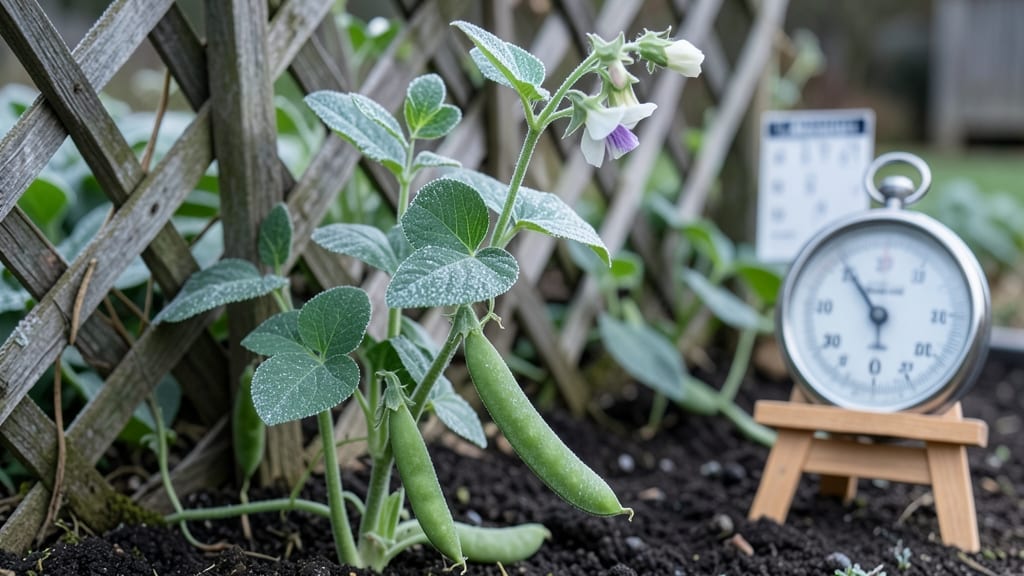
Peas are cold hardy vegetables that flourish in chilly conditions, enduring light frosts down to 20-25°F (-6 to -4°C) and even brief dips to 10°F (-12°C) in select varieties. These resilient plants thrive in USDA zones 3-10, making them perfect for early spring or fall planting.
Cold hardiness in peas isn't just about survival—it's about thriving. 🌱 The secret lies in their natural ability to undergo vernalization, a process where exposure to cold temperatures actually triggers better flowering and pod production.
Unlike many vegetables that bolt in cool weather, peas actually prefer temperatures between 60-70°F (15-21°C) for optimal growth, which is why they're one of the first crops I plant each spring.
Their roots can also withstand freezing soil as long as the tops remain dry, giving them a significant advantage in northern climates.
What's fascinating is how their growth cycle works—peas germinate best when soil temperatures reach 45-55°F (7-13°C), which is cooler than most vegetables. This means you can start planting them weeks before the last frost date in your area.
For gardeners in colder zones, varieties like 'Lincoln' or 'Wando' are excellent choices as they've been specifically bred for frost resistance, often producing sweeter pods when grown in cooler conditions.
💡 In This Article
- Pea Plant Cold Tolerance: Survival Limits and Growth Conditions
- Best Pea Varieties for Cold Climates and Planting Strategies
Pea plant cold tolerance: survival limits and growth conditions
Peas achieve their remarkable cold hardiness through a combination of physiological adaptations and biochemical processes. The most critical mechanism is vernalization, where exposure to prolonged cool temperatures (typically 32-40°F (0-4°C) for 2-4 weeks) actually stimulates flowering.
This is why peas planted in early spring often produce more abundant crops than those sown later—cold exposure primes their genetic growth cycle. Their cell membranes contain high levels of unsaturated fats, which remain fluid at low temperatures, preventing damage that would occur in plants with rigid membranes.
The survival threshold of 20-25°F (-6 to -4°C) applies specifically to mature plants with established root systems, though young seedlings are far more vulnerable.
What's often overlooked is how soil moisture dramatically affects cold tolerance—peas with adequate moisture in their root zone can survive 10°F (-12°C) brief exposures, while drought-stressed plants may succumb at 28°F (-2°C). This is why consistent watering before winter is crucial for overwintering peas in marginal climates.
The key difference between pea varieties lies in their ability to harden off—some develop protective sugars in their tissues when temperatures drop.
Peas' preference for cooler climates stems from their evolutionary origins in Mediterranean regions where summers are hot but winters mild. At temperatures above 80°F (27°C), peas experience heat stress, which accelerates bolting (premature flowering) and reduces pod quality.
The ideal growing temperature range of 60-70°F (15-21°C) creates a perfect balance where photosynthesis remains efficient while metabolic processes stay regulated. This is why gardeners in warm climates often struggle with peas—even when planted in fall, they may bolt before producing quality pods unless given afternoon shade.
What makes peas unique among vegetables is their ability to photosynthesize at lower light intensities than most crops, making them efficient growers in early spring when sunlight is weaker.
Their vining habit also helps them capture more light as they grow upward, while their deep taproots (reaching 12-18 inches) access moisture and nutrients from deeper soil layers where temperatures remain more stable. This combination of physiological traits explains why peas can outperform many other vegetables in cool-season gardens.
Consider this comparison: While lettuce may survive to 25°F (-4°C) but wilt at 30°F (-1°C), peas remain productive at 32°F (0°C) and can continue growing at 40°F (4°C).
Their cold tolerance extends to their reproductive phase—many varieties will set flowers and pods at temperatures where tomatoes would be completely dormant. This resilience makes peas one of the most reliable cool-season crops for gardeners in USDA zones 3-5, where growing seasons are short.
The science behind pea cold hardiness also explains why they're often the first crop I recommend for gardeners dealing with late spring frosts.
Their ability to recover from light frost damage (when tops are dry) while continuing root growth means they can bounce back when many other vegetables would be lost.
For example, after a 28°F (-2°C) frost, peas may lose their tops but regrow from the crown, whereas beans would be completely destroyed. This regenerative capacity is what makes peas the ultimate cold-season workhorse in the garden.