
Planting
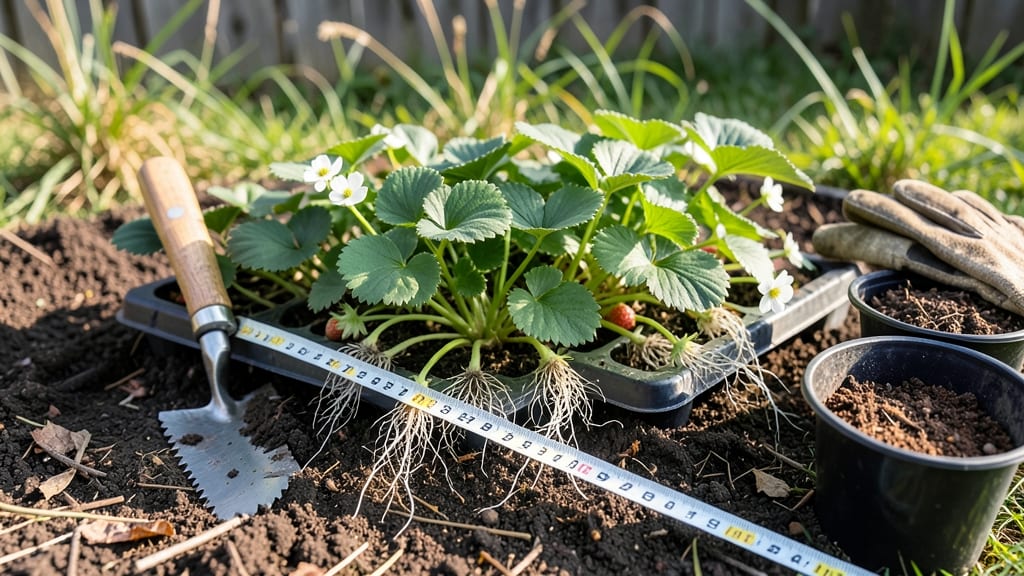
Strawberries need at least 6 inches of soil for their roots to spread, absorb nutrients, and produce sweet fruit 🍓 — and most gardeners either bury them too deep or leave them half-exposed without realizing the damage.
Picture this: you’ve spent weeks nurturing your strawberry plants, only to watch them struggle with stunted growth or poor fruiting. The culprit? Soil that’s either too shallow (roots bake in the sun) or too deep (roots suffocate).
Getting the depth right isn’t just about planting—it’s about setting up your berries for a full season of success.
In this guide, I’ll break down why 6 inches is the magic number, how to test your soil depth before planting, and the simple fixes for common mistakes that leave strawberries gasping for air. No guesswork, just actionable steps to give your plants the perfect foundation.
You’ll also learn how to spot signs of improper depth early, adjust mulch and amendments for better root health, and even troubleshoot if your plants are already struggling. Let’s get those roots happy so you can enjoy a bountiful harvest.
The ideal soil depth for strawberries: why 6 inches is non-negotiable
Strawberries may look delicate, but their root systems are surprisingly complex—and soil depth plays a critical role in their success. Unlike deep-rooted vegetables, strawberries develop a shallow but expansive root network that thrives in the top 6 inches of soil.
This isn't just a random number; it's rooted in science, affecting everything from nutrient absorption to fruit production. When you plant strawberries too deep, you suffocate their roots, while shallow planting leaves them unstable and prone to disease.
Think of a strawberry's roots like a spiderweb—spreading wide but staying close to the surface. The majority of their fine feeder roots (which absorb water and nutrients) cluster within that 6-inch zone.
When you bury the crown (where leaves meet roots) too deep, you block oxygen flow, causing root rot. Conversely, planting too shallow exposes roots to extreme temperature swings and poor anchorage, leading to floppy plants and small berries.
| Root Zone | Depth Range | Primary Function | Impact of Improper Depth |
|---|---|---|---|
| Surface Roots (0-1") | 0-1 inch | Water absorption, early growth | Drought stress if too dry |
| Feeder Roots (1-4") | 1-4 inches | Nutrient uptake, root expansion | Stunted growth if compacted |
| Anchor Roots (4-6") | 4-6 inches | Stability, deep moisture access | Floppy plants if too shallow |
| Critical Zone (6"+) | Below 6 inches | None (roots avoid this) | Root suffocation if planted deep |
The 6-inch rule ensures strawberries have enough space to develop their root crowns without smothering. When planted correctly, roots spread horizontally, creating a dense network that maximizes water retention and nutrient access.
This is why strawberries in containers or raised beds (with at least 6 inches of soil) often outperform those in shallow garden beds. The top 6 inches also warm up faster in spring, giving strawberries an earlier start to their growing season.
Let’s talk about water retention, a critical factor often overlooked. Strawberries in shallow soil dry out faster because their roots can’t access deeper moisture reserves. A 6-inch soil depth acts like a moisture reservoir, keeping roots hydrated during dry spells.
Without it, you’ll spend hours watering with little results. Even in rainy climates, proper depth prevents waterlogging, which can drown roots and invite fungal diseases like gray mold.
Now, let’s address the fruit production angle—the real payoff for gardeners. Strawberries produce most of their fruit on crown runners, which form near the soil surface. When roots are buried too deep, these runners struggle to emerge, reducing your harvest.
Conversely, shallow planting exposes runners to sunlight, causing them to dry out. The 6-inch sweet spot balances stability with access to surface runners, ensuring a bountiful crop. Studies show strawberries planted at this depth yield 20-30% more fruit than those planted incorrectly.
Many gardeners make the mistake of burying the crown too deep, thinking it’ll provide more stability. But this is a common misconception. The crown should sit just above the soil line, with roots fanning out below.
If you bury it more than ½ inch, you risk root rot and poor air circulation. On the flip side, planting too shallow (less than 3 inches) leaves roots vulnerable to temperature extremes and poor anchorage, leading to weak plants that flop over during fruiting.
To visualize this, imagine a strawberry plant as an umbrella. The crown is the handle, and the roots are the spokes spreading out. If you bury the handle too deep, the umbrella collapses. If you leave it too high, it topples over in wind or rain.
The 6-inch soil depth gives those roots the perfect foundation to spread out horizontally, creating a stable base for your plant. This is why professional growers use raised beds or mounds—they control soil depth precisely.
One of the biggest red flags of improper soil depth is yellowing leaves. If your strawberry leaves turn yellow, especially near the base, it’s often a sign of root suffocation from being planted too deep.
Another clue is stunted growth—plants that refuse to grow taller than 6 inches despite good care. Poor fruiting is another warning sign: if your strawberries produce small, underdeveloped berries, check your planting depth.
Even the soil texture matters; clay or compacted soil reduces root spread, so amending with compost is key.
For container growers, the 6-inch rule translates to using pots with at least 6 inches of soil depth. Many gardeners mistakenly use shallow containers, limiting root growth and reducing yields. If you’re repurposing containers, ensure they have drainage holes and at least 6 inches of loamy, well-draining soil.
Mix in perlite or vermiculite to improve aeration, and top with 1-2 inches of mulch to retain moisture without smothering the crown.
Remember, strawberries are perennial plants, meaning they’ll reward you for years if you get the soil depth right. A single misstep in planting can set your crop back for the entire season.
But when you nail that 6-inch depth, you’re not just planting strawberries—you’re investing in a thriving, productive garden that will keep giving you sweet, juicy berries for seasons to come. 🍓
How to test and prepare your soil depth for strawberry planting
Before planting strawberries, you must assess your soil depth—because these shallow-rooted plants need at least 6 inches of loose, fertile soil to thrive. Many gardeners overlook this step, leading to poor root development or even plant death.
The good news? Testing and preparing your soil is straightforward with the right tools and techniques.
Start by checking your existing soil depth using a simple soil probe or even a sturdy trowel. Push it into the ground until you hit resistance—this reveals how deep your natural soil extends.
If you find clay or rocky layers within 6 inches, don’t worry! We’ll cover how to amend it naturally later in this guide.
Step-by-Step Soil Depth Preparation
- Step 1: Test soil depth with a probe or trowel. Push until resistance is met—ideal depth is 6+ inches.
- Step 2: If depth is less than 6 inches, create a raised bed or mound using wood frames or straw bales.
- Step 3: For clay soil, mix in 2-3 inches of compost and peat moss to improve drainage and aeration.
- Step 4: Loosen the top 8 inches of soil with a garden fork to encourage root penetration.
- Step 5: Plant strawberries with the crown (leaf-roots junction) just above soil level—never buried.
For rocky or compacted soil, consider building a raised bed filled with a mix of topsoil, compost, and coconut coir. This creates the perfect 6-inch depth while improving drainage. I’ve had great success with 2-foot-wide beds—just ensure they’re at least 6 inches deep to accommodate root spread.
After amending, water the soil deeply to settle the mixture. Strawberries prefer slightly acidic soil (pH 5.5-6.8), so test your soil with a kit if you’re unsure.
If needed, add sulfur or lime to adjust pH before planting. This small effort ensures your strawberries get the nutrient-rich environment they crave.
Once your soil is ready, plant your strawberries in rows or hills, spacing them 12-18 inches apart. Mulch with straw to retain moisture and suppress weeds—this keeps roots cool and protected. With the right soil depth, you’ll see healthier plants and bigger yields in just a few months.